Key Takeaways
- Federal prosecutors will likely seek to keep Lil Durk jailed regardless of his murder-for-hire verdict because he faces a second racketeering trial and allegations of witness intimidation and attempted flight.
- An acquittal could strengthen Durk’s case for home confinement or electronic monitoring, especially because attorney Adanté Pointer says the two cases involve similar alleged conduct.
- The government could still appeal any release order, as it did after a judge granted Karl Jordan Jr. bond following the reversal of his Jam Master Jay murder conviction.
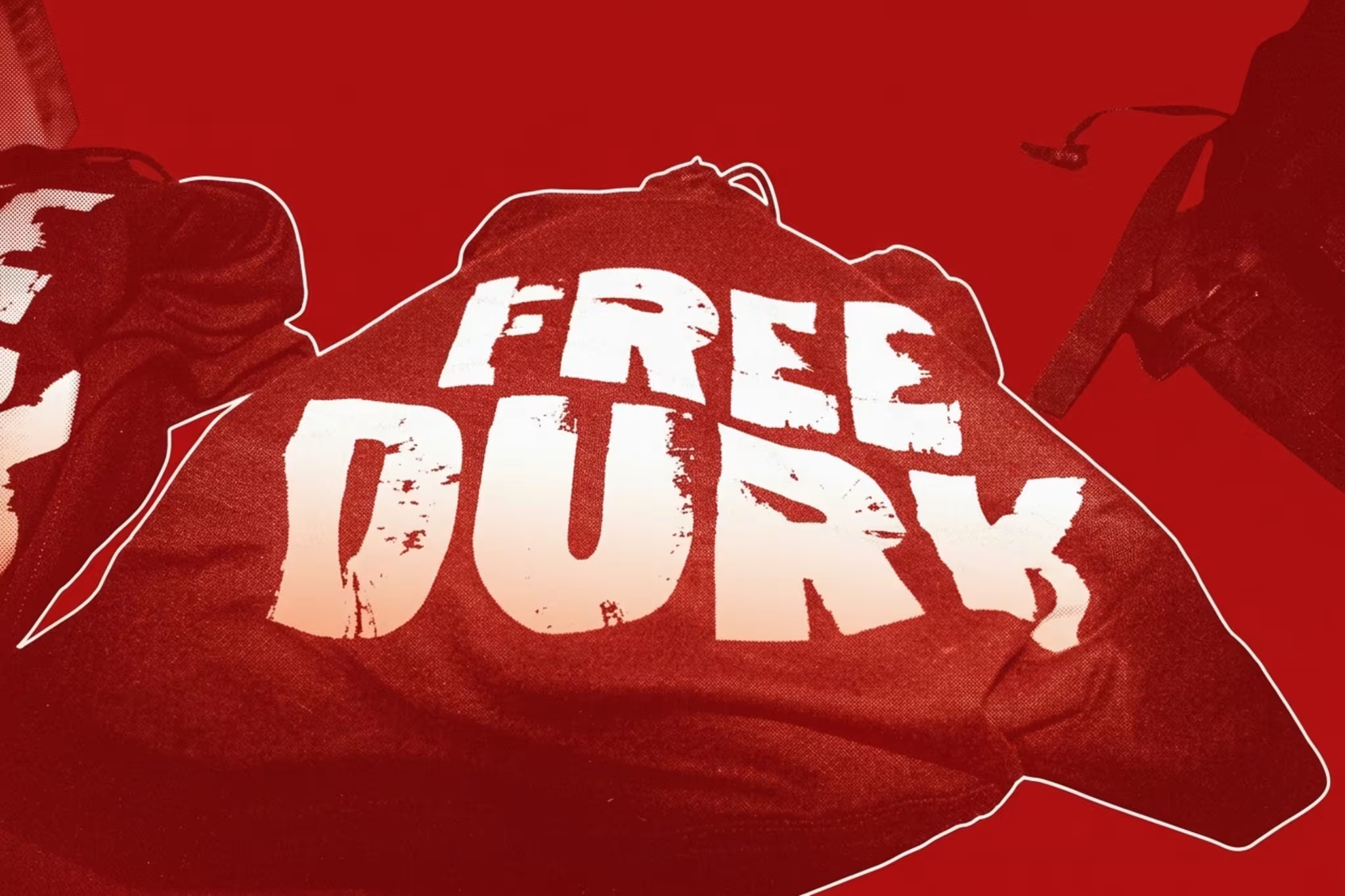
As Lil Durk’s murder-for-hire trial comes to a close and the jury begins to deliberate, there is one sense in which the verdict, whatever it is, probably won’t make a difference: No matter what the jury decides, the rapper may well remain behind bars, at least in the short term.
Here’s why the feds will (almost certainly) try to keep Durk locked up
Lil Durk is facing a second trial, on racketeering charges. Prosecutors originally wanted to try those charges along with the ones he’s now facing, but they lost that argument over the summer. The Grammy winner is accused of running a criminal enterprise that engaged in violence and drug trafficking. (We broke down the charges here, if you want a deep dive).
It seems all but certain that the federal government, regardless of the first trial’s outcome, will seek to keep Durk incarcerated until the second one is over. The reasons for that are straightforward. Prosecutors have already accused Durk of witness intimidation, and they will surely argue (as they did earlier, when he tried to be released on home confinement) that it is easier to intimidate witnesses while free than when in behind bars. In addition, much was made during the trial of Durk’s alleged attempts to flee the country as the feds were closing in, so prosecutors are likely to paint him as a flight risk.
Former federal prosecutor Neama Rahmani, now the president of West Coast Trial Lawyers, says that prosecutors will “almost certainly” ask for detention even if they lose at trial, because the loss, and the subsequent prospect of losing the racketeering case, don’t really matter.
“Detention is appropriate if there’s two factors in place: someone is either a risk of flight, or they’re a danger to the community,” he explains. “It doesn’t really turn on the merits of the case or the strength of the evidence, although that’s one factor to be considered. But the primary factor is risk of flight and danger. And the evidence is generally viewed in the light most favorable to the government.”
Trial attorney Adanté Pointer tells Complex that while the feds will assuredly try to hold Durk in custody regardless of the trial’s outcome, an acquittal means that he has a good shot of some form of freedom. One main reason for that is what he is being accused of in the second trial bears a great deal of similarity to what he was accused of the first time around. This time, the charges center around violent incidents that the rapper either allegedly participated in or planned in Atlanta and Chicago, rather than the Los Angeles shooting that is at the center of the current case.
“If he is acquitted, then Durk’s team will have a much better argument to say, a lot of this similar conduct is being alleged, and maybe even some of the same people are involved in both situations,” Pointer said. “Given that the jury acquitted him in Los Angeles, that weakens the prosecutors’ position that it’s likely he did whatever he’s accused of in [Atlanta or] Chicago.”
The lawyer points out another thing that potentially weighs in Durk’s favor: federal judges have a lot of options to keep tabs on people that don’t involve incarceration.
“They can do home confinement, they can do electronic monitoring, they can have the probation department monitoring him and having him check in,” he said. “They can have daily check-ins and things of that nature. Or they could even have him in an alternate confinement situation. The feds have many more options available to them than your typical state court judge in terms of monitoring a person who’s going up on trial.”
How this relates to Jam Master Jay
A similar situation to Durk’s is playing out right now, and it shows how far federal prosecutors are willing to go to keep someone locked up, even when they haven’t been convicted—and even if a judge wants to set them free.
Karl Jordan Jr. was convicted of killing Run-DMC’s Jam Master Jay in 2024, but that conviction was overturned the following year. Much like Durk, Jordan still has an additional trial to go through, on separate drug charges. Federal prosecutors fought to keep him locked up through the second trial, even after his conviction on the Jam Master Jay case no longer stood.
In fact, they went further than that. When the judge in the case decided that Jordan should be free on a $1 million bond package, the feds immediately appealed, so Jordan was ordered to remain behind bars as that appeal plays out. It’s now five months after a judge said he should be set free, and Karl Jordan Jr. remains locked up in Brooklyn’s Metropolitan Detention Center as an appeals court makes its decision—a process that could take weeks or months.
What we can expect
It seems a near-certainty, for all the reasons mentioned above, that prosecutors will attempt to keep Durk in jail after a verdict comes in. If Durk is found guilty, expect the inevitable arguments that he is dangerous to the community, liable to intimidate witnesses, and a flight risk to be taken extremely seriously by the case’s judge. A mistrial, Rahmani says, will result in a similar set of arguments.
If there is an acquittal, however, there is at least a possibility that the rapper will not be imprisoned. But it’s unlikely, even in that case, that he’ll be moving freely. The most plausible scenario would be some sort of home detention—the exact kind of package his lawyers unsuccessfully argued for back in 2024.
However, even if Durk is granted some sort of freedom, there is a chance—as happened with Karl Jordan, Jr.—that the government will appeal. In that scenario, a judge deferring to the government and keeping a defendant locked up until the appellate process plays out is rare, Rahmani tells Complex. However, that is exactly what happened to Jordan.
So watch carefully for a verdict in the case, whenever it happens. But keep in mind that Lil Durk being found not guilty doesn’t necessarily mean that the next step is his freedom.