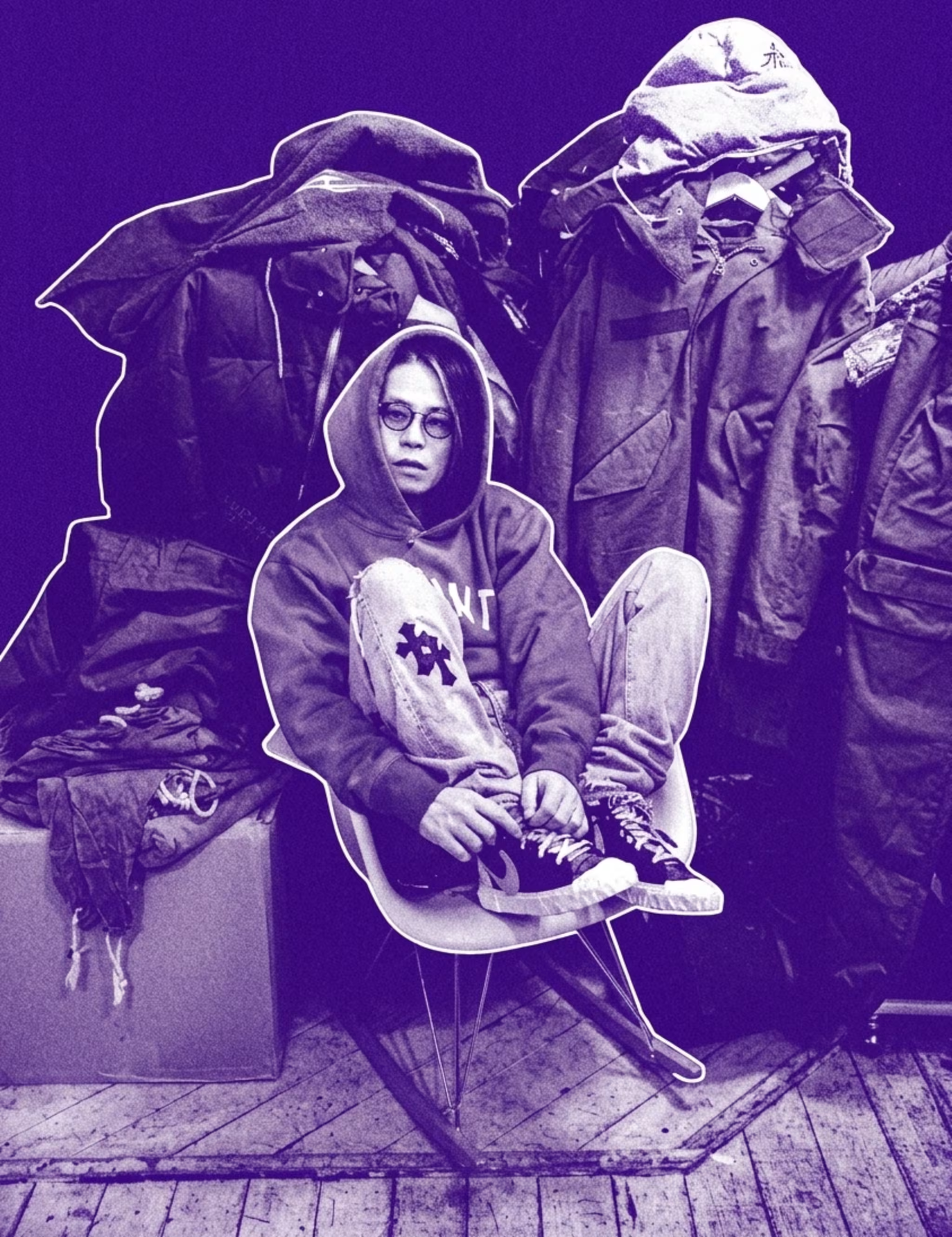
It started with a gym bag. Not a sneaker, not a hoodie, not a runway show. In 2013, an Osaka designer named Yuta Hosokawa began cutting up deadstock U.S. military tents, stitching them into bags, and leaving the original stenciled lettering right where the Army put it. Every piece came from a different source garment, which meant every piece was a one-of-one.
READYMADE takes its name from Marcel Duchamp’s idea that an everyday object becomes art once an artist picks it. Yuta Hosokawa does the same with Army surplus, mixing an anti-war message and a slow, anti-fast-fashion pace with obsessive Japanese craftsmanship.
Thirteen years later, READYMADE flies under the radar, but is quietly one of the most influential labels in Japanese fashion. It got early co-signs from Virgil Abloh, Don C, and Poggy, landed a Nike collab, and spun off into Saint Michael, the cult vintage-wash label Hosokawa runs with Los Angeles artist Cali DeWitt. Here is everything to know about READYMADE.


Before READYMADE, Hosokawa was making slim suits in Osaka
Hosokawa was born in Osaka in 1982 and graduated from Osaka Mode Gakuen in 2003, where he trained as a stylist. One year later, he launched his first label, S'exprimer, It was known for slim, elegant silhouettes. Hosokawa was largely self-taught as a designer and picked up tailoring and sewing on the job.
Those self-taught origins can still be seen across READYMADE’s products today. Many feature frayed edges, faded drab, and stencils.
The first READYMADE product was a bag made from a military tent
Hosokawa launched READYMADE in 2013 as an experimental side project. The first item was a gym bag cut from deadstock military tents he sourced in the U.S. Maxfield, the iconic Los Angeles retailer, became the first store to sell the brand. It immediately grabbed the attention of its customers.
Demand outran a handmade supply almost immediately. Because each bag came from a different tent, no two were the same, and Hosokawa has said production on a single run could take months.
The stencils and stains are the point
READYMADE's whole design language comes from the source material: deadstock and vintage U.S. military surplus, including tents, uniforms, and canvas. Instead of hiding where the fabric came from, Hosokawa keeps the original lettering, patches, and wear marks on the finished piece.
Hosokawa has framed READYMADE's concept as "denial, attack, and destruction against common sense," and has described taking apart military gear in peacetime as a signal to end all wars. Because each item is cut from a different surplus garment, no two READYMADE pieces match exactly.
The line has grown well past bags into outerwear, hoodies, tees, denim, caps, and accessories, but the core idea has not moved. You are buying a garment with a past life.
Virgil Abloh and Don C were early believers
By 2016, Hosokawa had made a three-stripe backpack with Virgil Abloh's Off-White. That October, he dropped a capsule with Don C's Just Don: the signature shorts and hats reworked in vintage army canvas with gold bullion embroidery, handmade in Japan and the U.S. It landed at RSVP Gallery, United Arrows & Sons, GR8, and Maxfield.
Tokyo's tastemakers wore it first
Before the Nike collaborations and the gallery shows, READYMADE spread through Asia's style elite. United Arrows' Motofumi "Poggy" Kogi, Edison Chen, model Kozue Akimoto, and Vanness Wu were among the brand's early supporters.
READYMADE’s Other Collaborations
Off-White, Just Don, Fear of God, BAPE, Chrome Hearts, and Yohji Yamamoto have all worked with READYMADE, along with artist projects with Cali Thornhill DeWitt and Dr. Woo. Hong Kong's JUICE has done limited runs too. Arguably its biggest mainstream project was the READYMADE x Nike Blazer Mid, which released February 27, 2021, for $160 in black and white colorways. The shoe looked half-finished on purpose: warped Swooshes loosely stitched to the sides, exposed stitching, dual lacing, a marbled collar print, and a bubbly white sole that crept up the toe. Pairs shipped in graffiti-marked boxes and dropped on SNKRS, at NikeLab MA5, and at Dover Street Market Ginza.
A third grey colorway with royal blue Swooshes and a Nike Grind outsole followed via friends-and-family raffle, tied to Hosokawa's gallery show.
Takashi Murakami gave Hosokawa his first solo show
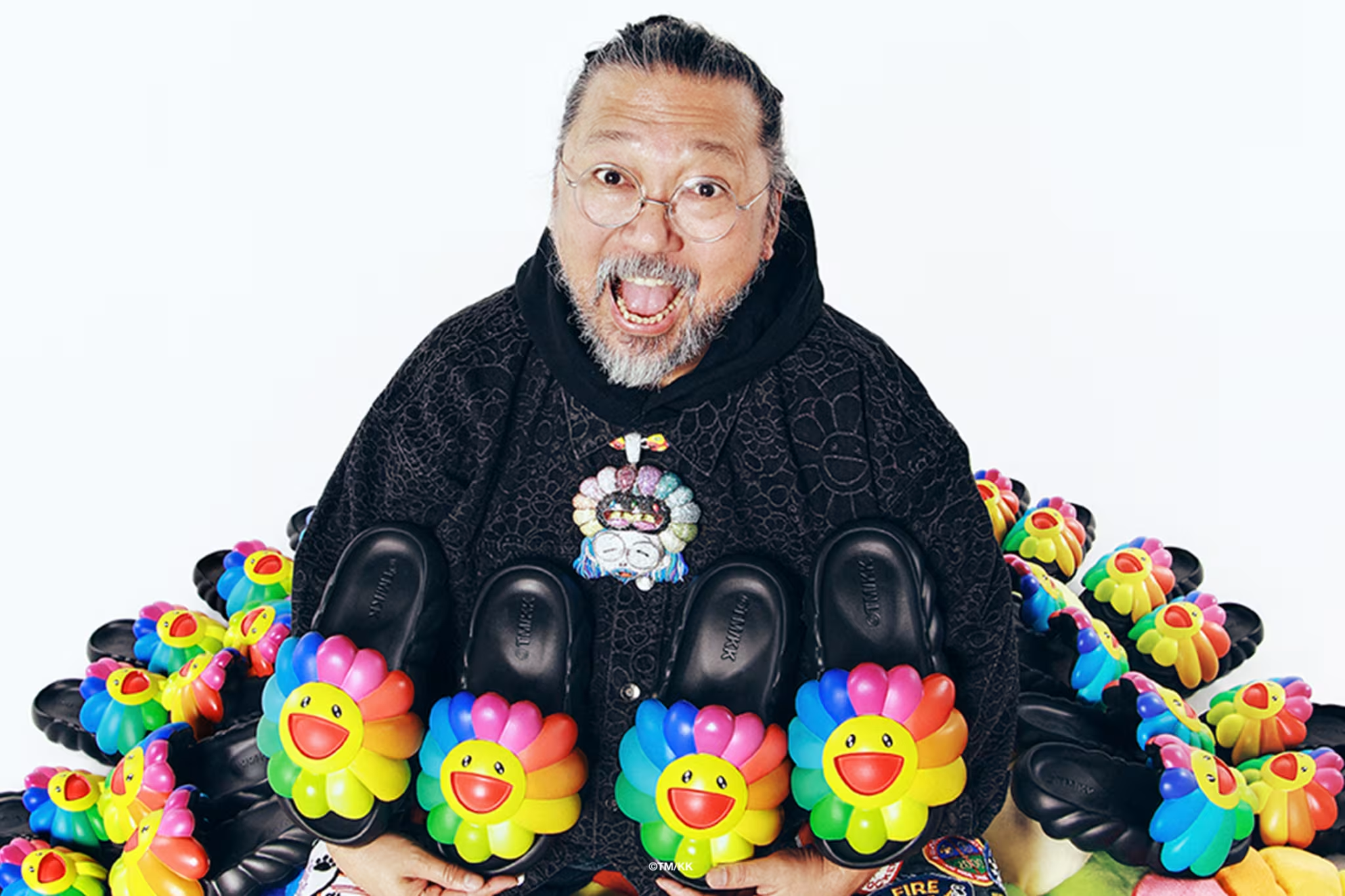
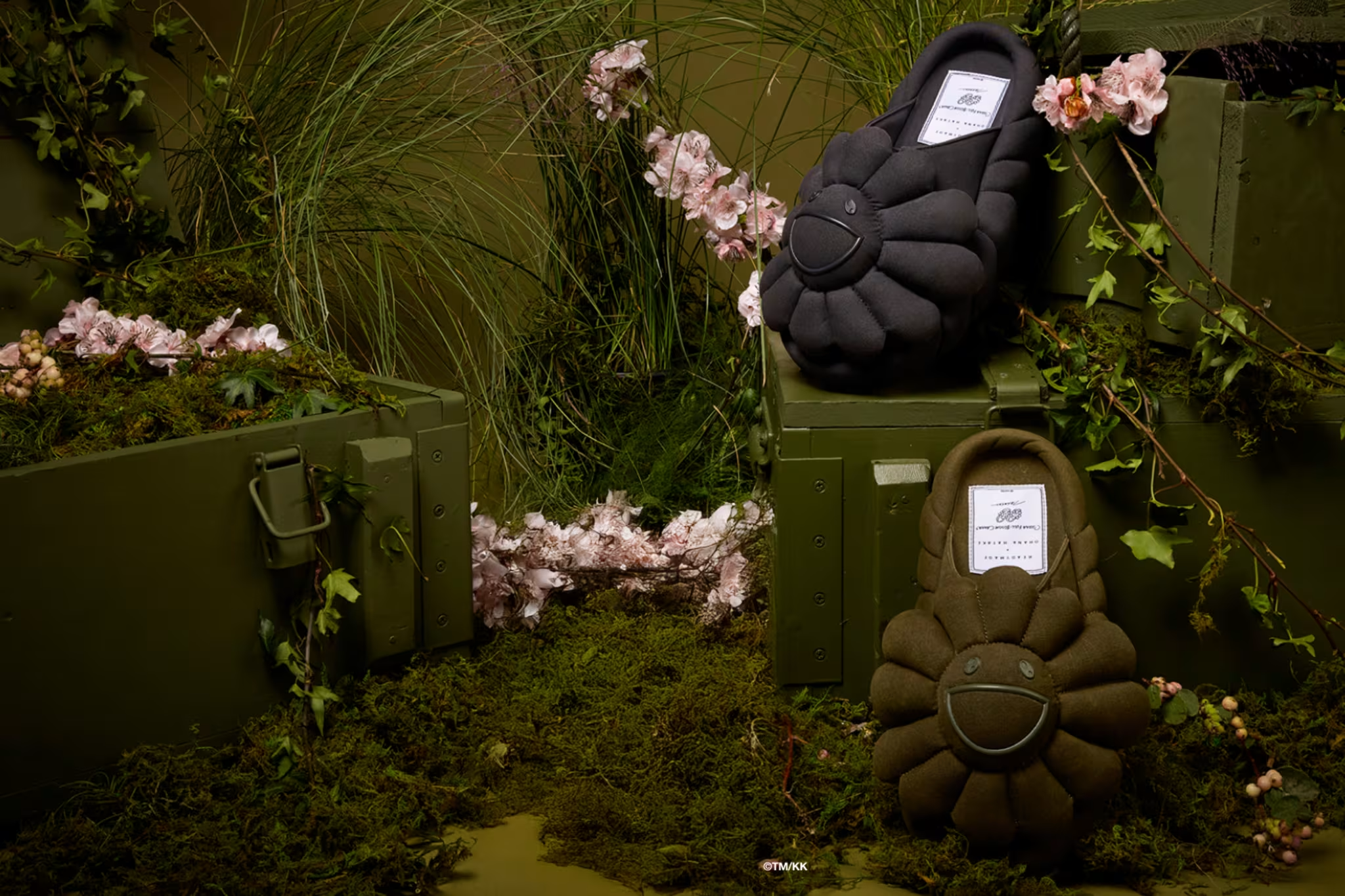
In June 2021, Hosokawa held his first solo exhibition at Murakami's Kaikai Kiki Gallery in Tokyo. The two also collaborated on apparel including Murakami flower shorts, one-of-one vintage jeans with embroidered smiling flowers and flower-shaped buttons in May 2022, and a fishtail parka made from repurposed U.S. Army tents later that year.
In Spring 2026, after roughly two years of development, they launched mononoke made, Kaikai Kiki's first original brand. The partnership between Murakami and Hosokawa dates back to 2018, when Hosokawa first worked Murakami's art into his designs. The first drop centered on tees, hoodies, belts, and wallet chains, with Hosokawa handling fabric, construction, and finishing so the art did not look "simply slapped onto the clothes." Statement pieces like the Sakura varsity jacket reportedly cleared ¥1.5 million (about $9,500). A second collection followed in June.
Saint Michael is Hosokawa’s Latest Project
In January 2020, Hosokawa debuted SAINT Mxxxxxx in Paris with Los Angeles artist Cali DeWitt. The two were introduced by Kubo of Tokyo's GR8. Saint Michael takes tees, hoodies, and even a Schott Perfecto and beats them up by hand, tumbling 30-thread cotton in drum dryers and layering on DeWitt's saints, angels, and punk scrawl.
Hosokawa is clear that it is its own thing. "It is totally different from READYMADE; it is a new brand," he told Highsnobiety. The keyword, he said, is vintage: he wanted people to "feel the history of vintage clothing when they hold it."