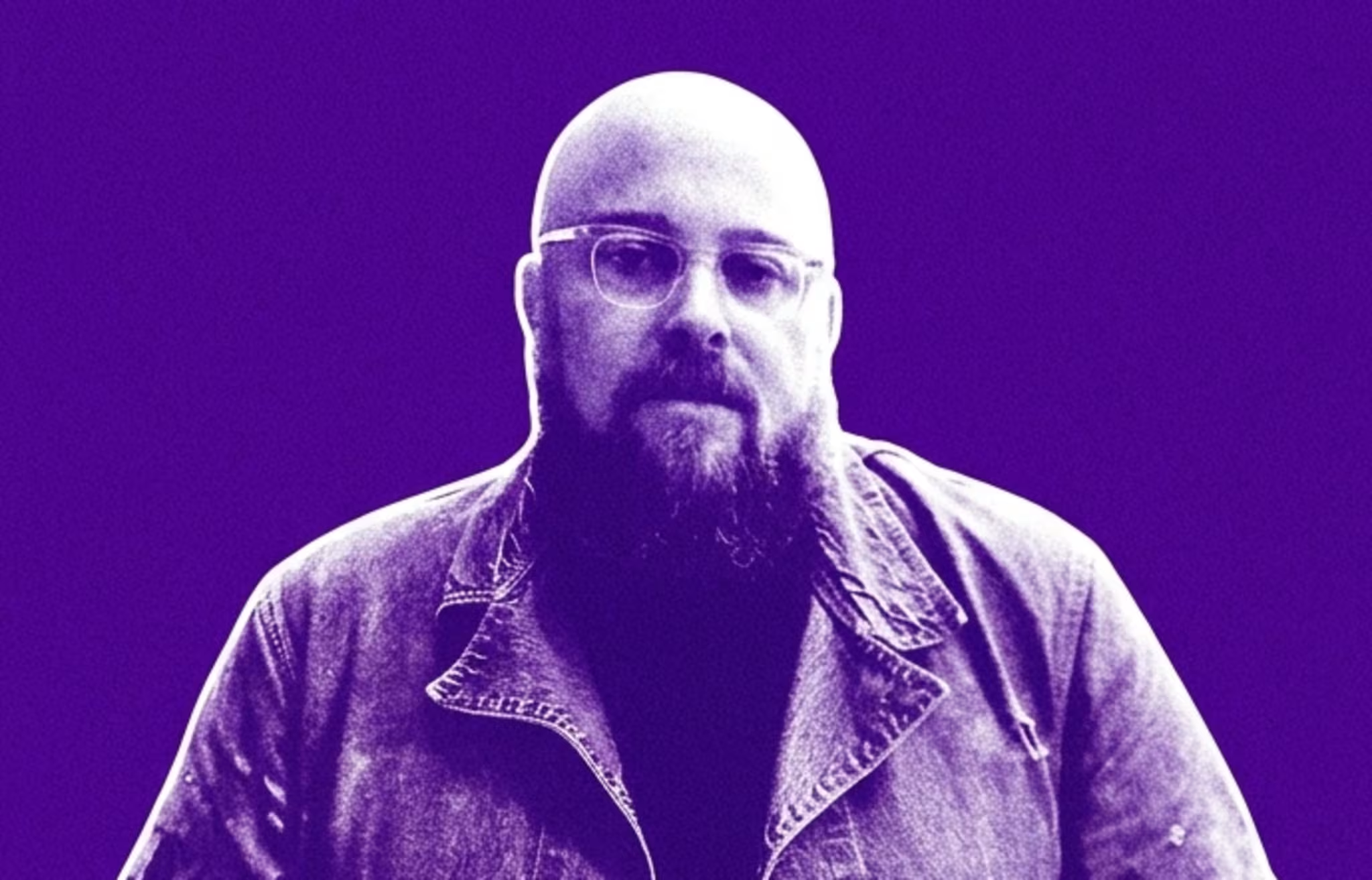
Jon Buscemi appreciates the finer things executed at the highest level. For over 20 years, he hasn’t just been a consumer of luxurious products, he’s been a creator of them. From a high-top sneaker made of premium Italian leather to a $20 bottle of hot sauce, Buscemi isn’t interested in cutting corners. Now, he’s bringing that mentality to the golf world with his exclusive, member’s only platform, Redan.
"Basically, my entire life has been luxury with a twist. I think it's just some hip-hop shit from back in the days,” says Buscemi. “My whole thesis is, ‘I want to make stuff for the coolest guy and the flyest guy in my neighborhood.’”
Redan formally launched in 2017 to give stylish golfers something aspirational. You won’t see those plastic-y, moisture-wicking clothes in its collections. Redan crafts everything in Italy out of some of the finest textiles in the world. And it won’t just look good on the back nine. You can easily transition it into your everyday wardrobe. In many ways, it’s a callback to the classic golf wardrobe of the ‘70s and ‘80. It’s the latest example of a brand bringing a refined taste level into the golf apparel space. It’s also the most recent attempt by Buscemi to create a brand that will stand the test of time.
Shop Sportswear on Complex
 Complex Core Zip Hoodie (Black)$70
 FlyQuest x Von Dutch Rattlesnake Tee$21
 Complex Core Hoodie (Black)$55
 Complex Core Tee (Camouflage)$28
 Complex Core Hoodie (Washed Brown)$65
 PUMA SPEEDCAT PREMIUM - OLIVE$66
 FlyQuest x Von Dutch Worlds 2025 Hat$40
 Complex Core Zip Hoodie (Washed Brown)$70
 Complex Core Tee (Washed Brown)$28
 PUMA SUEDE THE NEVERWORN VI - VAPOR$84
 TNF M RED BOX SMALL CARRY BAG GREEN$65
 FlyQuest x Von Dutch Rattlesnake Tee$21
“I just like the idea of higher quality fabrics, higher quality fabrications, things that last forever,” says Buscemi. “I’m wearing a 30-year-old chambray shirt. I don't know the designer. I just like it. I want to just make really good things and forget if it's luxury or not.”
To understand what Buscemi is bringing to Redan, you have to understand the journey that got him here. We spoke with the entrepreneur and designer about his fashion journey.
Uniondale, New York: The Beginning of the Obsession
Growing up in Long Island in the ‘80s, Buscemi was taught about the importance of style at an early age."You couldn't leave the house unless you were ironed, you had a fresh pair of sneakers on, your jeans were right, your jacket was right, the hat was correct," recalls Buscemi. "Ghostface [Killah] said every day is a video shoot. That was really the feeling."
Seeing the BMW parked on his street or discovering the custom pieces that Dapper Dan was created in Harlem showed him what true quality looked like. "I always gravitated towards the higher quality garments and accessories," he says. "I just literally dragged that thesis through everything I do.”
DC Shoes and the Connoisseur Collection
Buscemi's first design gig in the fashion industry was at DC Shoes in 2002. He got to witness founders Ken Block and Damon Way operating at the peak of the brand’s success. It gave him his foundation. "Those guys taught me the business. Those guys gave me discipline," he says. The job put him on flights to fashion capitals around the world like Japan and France. Each stop gave him more tools to apply to his own design practice.
His role at DC is also where he first tested the instinct that has defined his work ever since. He remembers sitting in a meeting early on and posing a question: “How expensive can we make the shoe?” It wasn’t about making something expensive for the sake of it. It was indicative of Buscemi’s interest in producing everything at the highest quality, no matter what.
“I want to make something. These are all the elements I want. Don't strip away this and give me the flimsy version,” Buscemi tells Complex. “I just want to make what I want to fucking make, and then charge me what it costs.”
His time at DC allowed him to truly experiment with this ethos for the first time. DC’s Connoisseur Collection featured Japanese fabrics and Italian leather on skate shoes.
Buscemi’s proximity to Way made an impression too. Buscemi calls him a business genius with an eye for art, furniture, and cars. He recalls the two giant Michelin Man paintings by KAWS that hung in his office back in the 2000s. “Those paintings are worth a million dollars a piece now,” says Buscemi. "That's who I'm going to be."
Oliver Peoples, Gourmet, and the Spark
His next move was a pivot into luxury. In 2006, he became the brand director at Oliver Peoples under founder Larry Leight and then-CEO David Schulte. This is where he learned a new side of the fashion business.
Around the same time, Buscemi launched his first footwear brand, Gourmet, alongside Greg Johnsen and Greg Lucci. Founded in 2006, the independent label towed the line between streetwear and luxury silhouettes with experimental designs that featured lux materials like crocodile leather and fused trainers with duck boots. Gourmet scaled considerably in its lifespan before it ultimately fizzled out. Buscemi stepped away from the brand in 2013.
Around 2011 came the moment that sparked his most successful namesake business venture. Walking down Robertson Boulevard, he stepped into the newly opened Christian Louboutin store. There were hundreds of women's shoes on the wall. Tucked in a bottom corner was a single men's style, a black chukka boot sneaker. "It was like seeing my life in front of me. That's me. That's what I should be wearing," he says. "And that was really the spark of the idea."
The other half of the idea came at the Chateau Marmont. He woke from a dream and typed a note into his BlackBerry: “make a Birkin bag sneaker.” Those were the beginnings of Buscemi footwear.
The 100mm: Buscemi’s Addition to the Luxury Sneaker World
Founded in 2012, Buscemi eventually became known for its 100mm sneaker, but his first real product for the namesake brand wasn't even footwear. It was a leather duffle he developed with a small leather factory in downtown Los Angeles.The sneaker came together in Italy, thanks to an old friend. Noah founder Brendon Babenzien and legendary Italian production guru Ernesto Avenida introduced him to the footwear factories of Civitanova Marche in central Italy. "If that conversation didn't happen, who the hell knows?" Buscemi says.
He started the brand the same year Virgil Abloh launched Pyrex Vision and Babenzien rebooted Noah. All three catered to different sectors of the streetwear pie, but shared a motive: making the best things at the highest level possible.
Buscemi took off fast. Celebrities like Justin Bieber were spotted in them. "We went from zero to $100 million very quickly," he says. The brand "snuck into the luxury space," and suddenly found itself sitting alongside the likes of Christian Louboutin, Giuseppe Zanotti, and Tom Ford on department store shelves. Buscemi’s sneakers were part of a new lane that was being carved out in menswear at the time. Now, we refer to it as luxury streetwear, but Buscemi insists the type of product he was making wasn’t an entirely new idea. "I think it was always there. It just was never dubbed,” he says.
Hot Sauce, Sandwiches, and Falling in Love With Golf
After selling Buscemi to private equity firm Lion Capital in January 2016, Buscemi settled into what he describes as a retirement of two work days a week. A year later, he was bit by the golf bug when his friend, Malbon Golf founder Steve Malbon, invited him to play 18 holes. Before he knew it, he was playing on courses around the world and joining a country club.
But Buscemi’s “retirement” wasn’t a true stop. With his eponymous footwear brand in the past, he stayed busy through other entrepreneurial ventures. He invested in a premium hot sauce called Truff, had a consulting stint at StockX, and helped Paulie James open up the cult-favorite East Coast-inspired, West Coast-based sandwich shop Uncle Paulie’s, to name a few. But he still had a gap to fill. He needed the right clothes for his golf outings. The problem was, they didn’t exist yet. So, he made them.
Redan: Buscemi Brings Luxury Fashion to Golf
Launched in February 2025, Redan is a luxury men's golf brand with a twist. You have to be invited and there is an annual membership fee. The product is primarily made in central and southern Italy, and runs from cashmere-merino knits to wool-blend polos. Exclusive collabs have included Tiffany and Co., FootJoy, and Bettinardi putters. Private events, curated around golf and food, are hosted around the world. Other membership benefits include concierge services to secure tee times, a golf digest, and perks with other high-profile hospitality brands like Moët Hennessy and the Private Suite at LAX.
While Redan’s apparel offerings lean much closer to luxury labels like Brunello Cucinelli or Loro Piana, Buscemi hasn’t abandoned his streetwear roots. A keen eye will notice some of the callbacks to Buscemi’s come-up. Everyday staples like New Era caps are in the mix. One of the best examples is a sweater made out of a Merino wool/cashmere hybrid Buscemi dubs Casual Knit with gussets to mimic Champion’s iconic Reverse Sweat sweaters. A Merino wool quarter zip with cut-off sleeves is called the Jordan, a reference to the signature sideline attire of legendary football coach Bill Belichick that’s named after his current girlfriend. "That's really streetwear, rebellious, fucking with the codes," Buscemi says.
Buscemi describes the target customer less as a trend-chaser and more as the man who has everything else handled. "He has a great taste, he has a great car, he has the right watch. He lives in a great apartment or a house," he says. "But that guy goes and now has to wear a costume and a plastic clothing and badly made golf gear from sports brands, and he is sad." Redan's pitch is natural fibers over performance synthetics. Members can shop items through the Redan app. The elevated quality comes with a higher price point, but the exclusivity is part of the allure. "Redan's not for everyone, but that's the point," he says.
With a current member pool of 500 and growing, Redan’s expansion plan is already in motion. Next up is Asia. "We're expanding into Asia, specifically Japan and Korea, in the next year and 18 months," says Buscemi. Eventually, he wants to open his own Redan clubs around the world, which will offer all of the membership perks under one roof. It’s not going to happen overnight. Buscemi is ok with it. For now, the plan is simple. "My goal is to work on Redan every day,” he says. “That's my twenty-four seven."