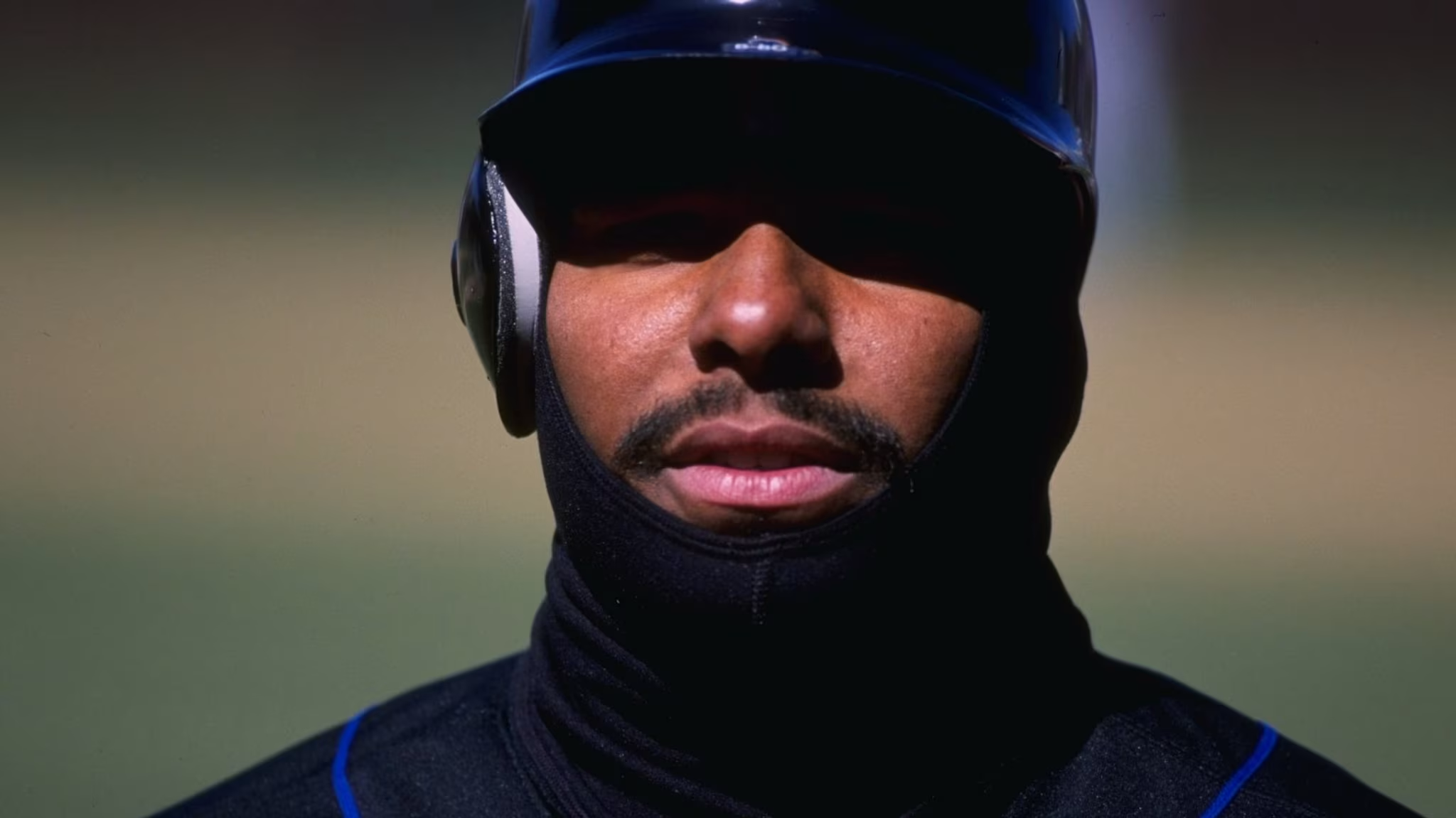
Every July 1, baseball fans celebrate one of the sport's strangest—and most enduring—financial traditions. While most retired players have long since stopped collecting paychecks, Bobby Bonilla still cashes one from the New York Mets, receiving $1,193,248.20 every July 1 through 2035. The annual payment has become so famous that it now has its own unofficial holiday: Bobby Bonilla Day.
According to ESPN, the tradition dates back to 2000, when the Mets decided to part ways with Bonilla but still owed the former All-Star $5.9 million. Rather than paying the remaining salary immediately, Bonilla and his representatives negotiated a deferred-payment agreement. The Mets would wait until 2011 to begin making annual payments at 8% interest, resulting in nearly $29.8 million spread over 25 years.
At the time, team ownership believed its investments with financier Bernie Madoff would generate returns large enough to offset the cost of the deal—a calculation that unraveled after Madoff's massive Ponzi scheme collapsed years later.
The irony is that Bonilla wasn't just a quirky contract. Before becoming baseball's most famous deferred-payment story, he was one of the game's premier sluggers. During his peak with the Pittsburgh Pirates, Bonilla earned four consecutive All-Star selections, won three Silver Slugger Awards, finished near the top of National League MVP voting twice, and helped power Pittsburgh to three straight division titles alongside Barry Bonds and Andy Van Slyke.
He later signed a then-record five-year, $29 million contract with the Mets before adding two more All-Star appearances and winning a World Series with the Florida Marlins in 1997.
Bonilla's relationship with New York, however, was rarely smooth. At his introductory Mets press conference, he famously challenged reporters by saying, "I know you all are gonna try, but you're not gonna be able to wipe the smile off my face."
The tension never fully disappeared, and his second stint with the club ended after the 1999 season, paving the way for the deferred-payment agreement that would define his post-playing legacy.
What once seemed like an oddball contract has since become far less unusual. Deferred money is now a common roster-building tool across Major League Baseball. Bonilla also collects a separate deferred payment of $500,000 annually from the Baltimore Orioles, while players including Max Scherzer, Manny Ramírez and Chris Davis continue to receive checks long after leaving their former clubs.
More recently, Shohei Ohtani made headlines by deferring $680 million of his $700 million contract with the Los Angeles Dodgers, beginning annual $68 million payments in 2034. The difference is that Bonilla's deal resulted from a buyout of an underperforming veteran, while Ohtani proposed his own structure to provide the Dodgers with greater payroll flexibility.
Bobby Bonilla Day has also become an annual reminder of baseball's unique economics. Bonilla, who last appeared in a major league game in 2001, will make more from the Mets this year than several of MLB's brightest young stars earn in salary, including Pete Crow-Armstrong, Jacob Misiorowski, Dillon Dingler and Nick Kurtz, whose pre-arbitration contracts all fall below Bonilla's annual payout.




