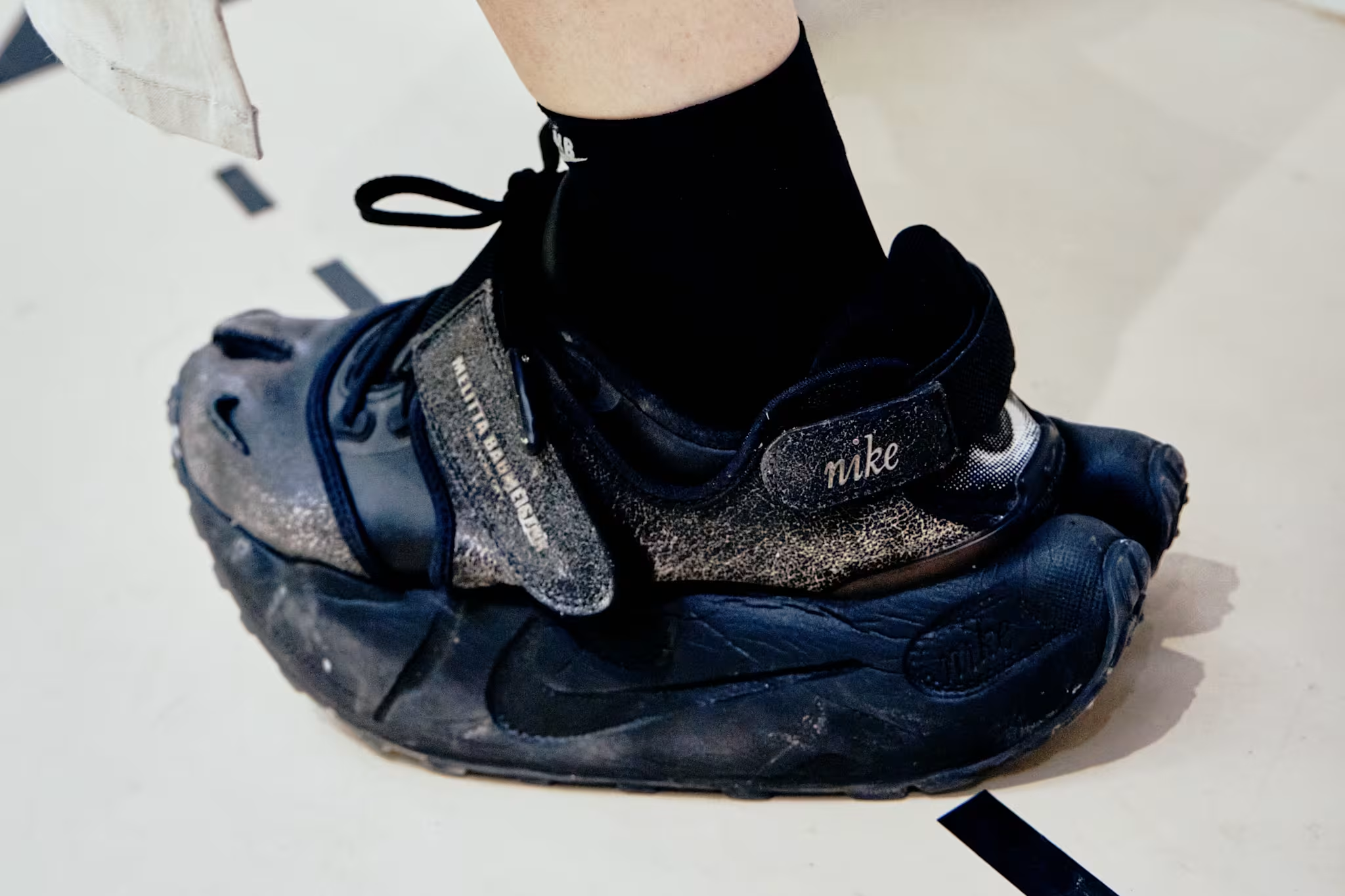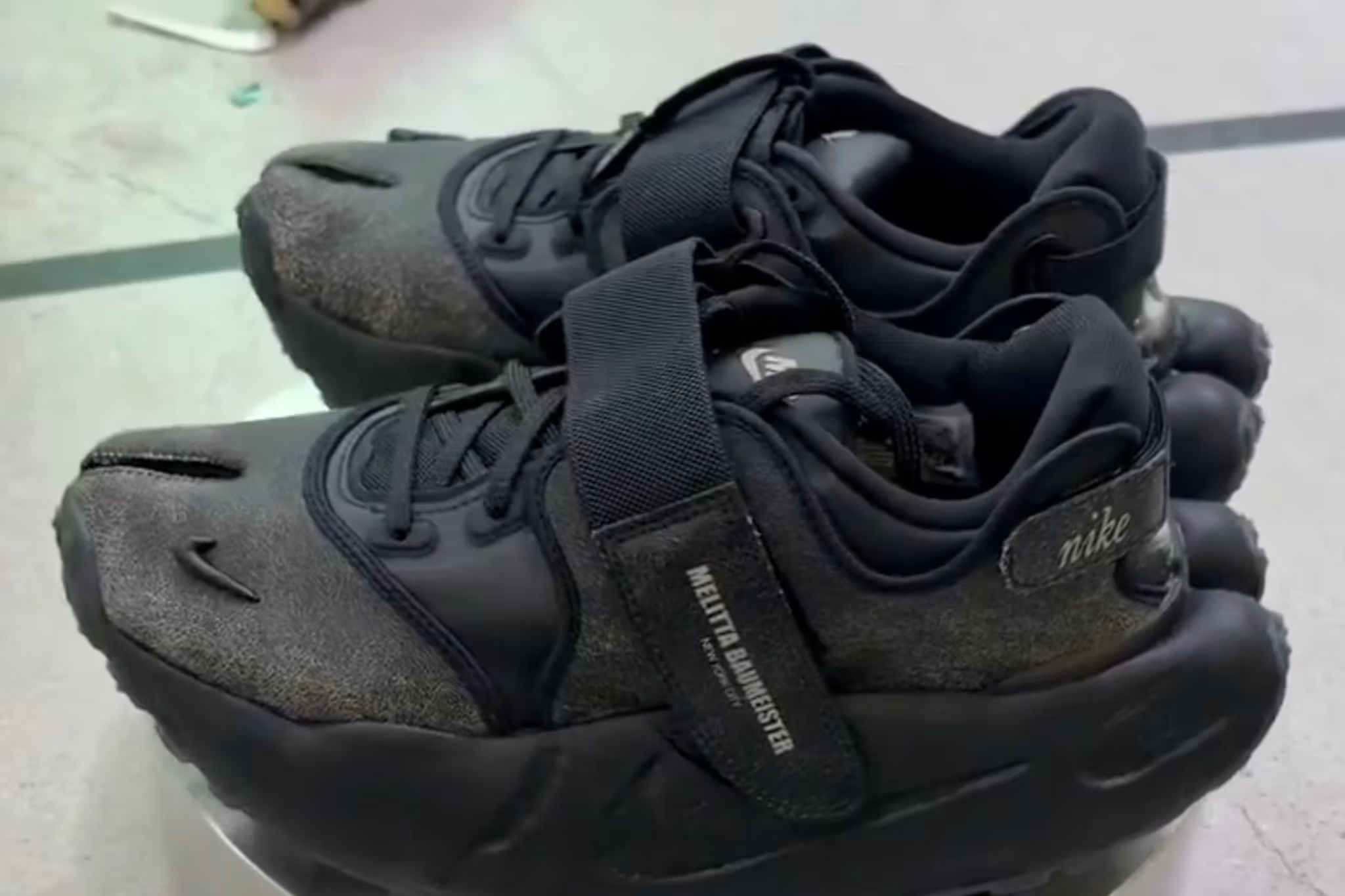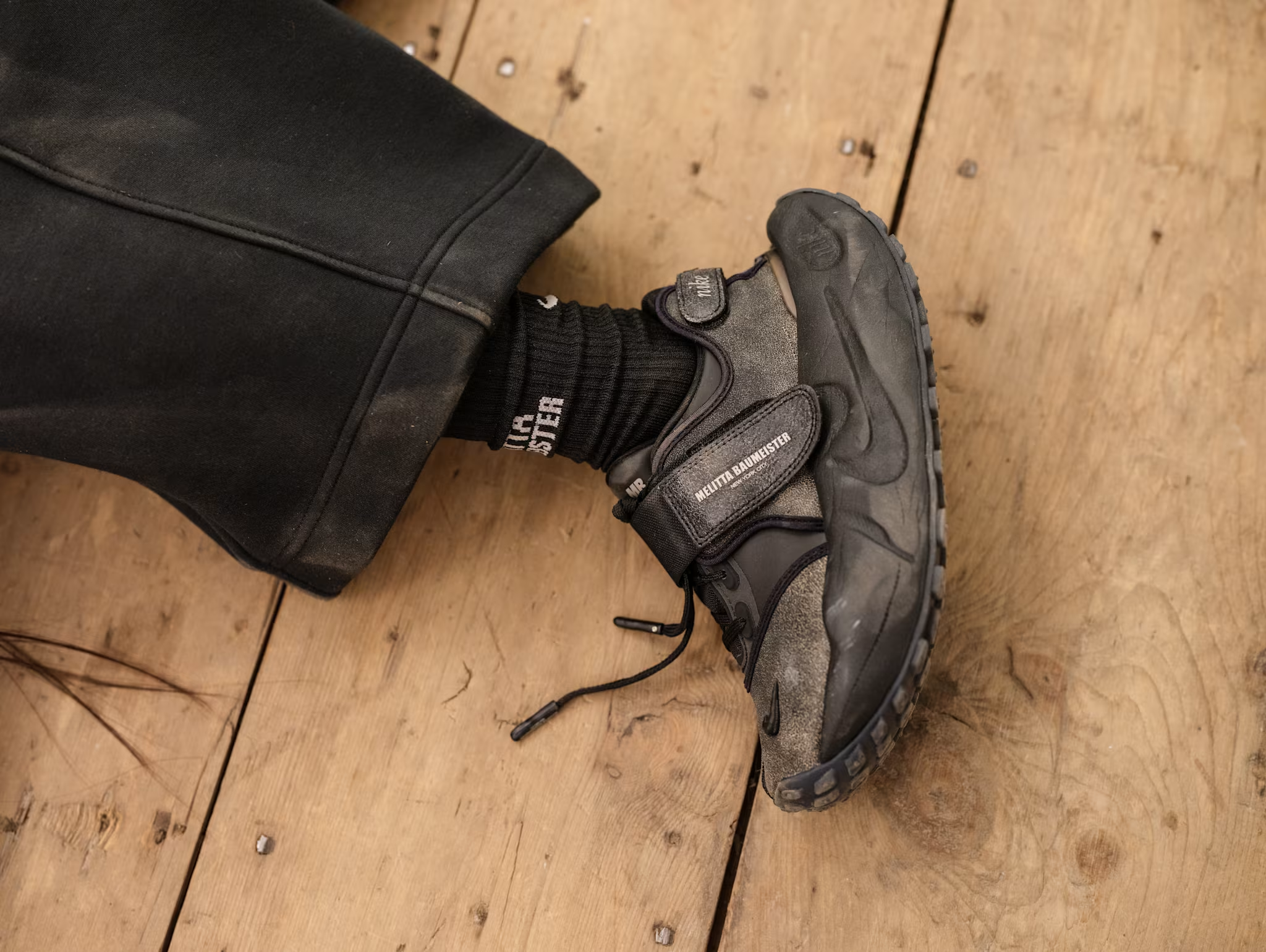
Melitta Baumeister and Nike have a new sneaker collaboration on the way, and it’s their most daring release yet. The New York City-based designer and the Swoosh released their inaugural sneaker project in April, centered on the hand-painted Vomero Premium and Pegasus Premium, which immediately ranked among the best releases of 2026. For fall, Baumeister is taking a different approach by releasing a modified version of the split-toe Air Rift model dubbed the Rift Rocker.
For this project, Baumeister says she “didn’t want to just put our colors on it.” This time, she and her namesake brand wanted to bring their avant-garde lens to their new Rift Rocker. Despite the sneaker still having the DNA of the Air Rift, this version is uniquely her own. Baumeister’s eye motif appears on the heel and co-branded “MB Swoosh” logos throughout. The standout design element is the chunky and exaggerated sole that gets its shape from molded clay.
Ahead of the release on November 5, we asked Baumeister about her new Nike Rift Rocker, to compare the design process between this project and her successful Vomero Premium and Pegasus Premium collabs, and more.
Shop Nike on Complex
 Nike Kobe Protro 3 "Mamba Eterno"$190
 Nike Air Max Metro Pale Ivory/Black$130
 Ja 4 'Halloween'$140
 Nike Air Foamposite Pro PRM "Glow In The Dark"$250
 Nike Air Force 1 Low Halloween "Metro Card"$140
 Nike Baltoro - Olive Khaki/Black-University Red$145
 Nike Air Max 90 "Neon"$95
 Nike ACG Ultrafly Trail - Spruce Fog$182
 Nike G.T. Future - Triple Black$210
 Nike Air Max 95 "Big Bubble" Cacao Wow/Tropical Teal-Black$190
 Nike Blazy - Varsity Red$95
 NIKE CRYO SHOT MRCRL VPR 1 OG CHROME/BLACK-HOT LIME$210
How did you land on the Nike Rift for this project and then decide to rework the model?
The Rift was always on our mind. The split toe is already strange and sculptural, and it was one of the first Nike shoes that broke the idea of what a sneaker should look like. That felt very close to how we think about clothes.
But we didn’t want to just put our colors on it. This time we wanted to change the shape itself. So we kept what makes the Rift recognizable, the split toe and the strap, and rebuilt everything underneath. We sculpted the new sole in clay, and that became the Rift Rocker.
What was your design approach to the new Nike Rift Rocker?
We started from the Air Rift. It’s one of Nike’s most unusual archive shapes, and the split toe already felt close to our world. Then we pushed the proportions. We sculpted the midsole by hand in clay and kept working it until the volume felt right. That clay form became the new rocker tooling. So the shoe has the same thing our clothes have, an exaggerated shape that still works on the body.
Were there any challenges that came with updating the Rift to the Rocker?
The biggest challenge was going from clay to production. A hand-sculpted shape has small irregularities that give it character, and we had to keep that feeling once it became [the] tooling. Another challenge was the upper. We built it in two layers, an inner one that laces up, and an outer one that works with the strap. Fitting those two into one shoe, so it still looks clean and feels right on the foot, took a lot of work.
How has the design approach stayed the same or changed as compared to the previous Vomero Premium and Pegasus Premium collabs?
What stayed the same was the hands-on approach. On the Vomero and Pegasus, we applied the paint by hand. On the Rift Rocker, we sculpted the midsole by hand in clay, and that became the new tooling.
The difference is that the Vomero and Pegasus were existing Nike shapes, and we added our take through the color and graphics on the upper. With the Rift Rocker, we built the shape from the ground up.
When working on a project that includes both apparel and sneakers, which do you start working on first? Or are they at the same time?
We worked on both the apparel and the Rift Rocker sneaker at the same time. Shape and silhouette are what we are known for and a sneaker changes the whole silhouette of a look. So we had to design them together.