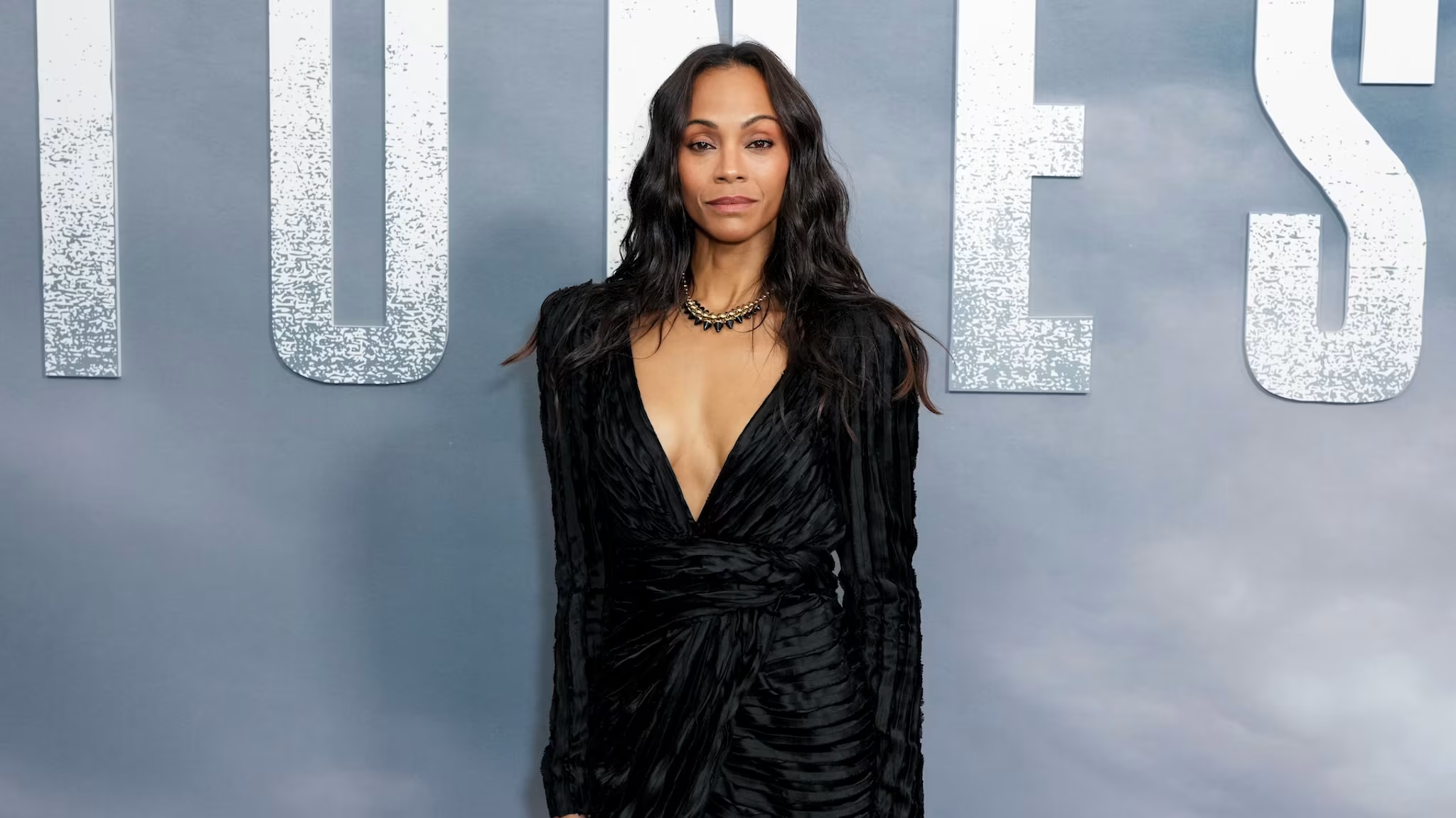
Zoe Saldaña is calling out a pattern in entertainment that she believes unfairly targets people of color.
During a public conversation at the Locarno Film Festival on Monday (Aug. 10), the Academy Award winner spoke on continuously being asked about political and systemic questions.
Saldaña pointed out that the same thing happens to other entertainers of color and that non-marginalized entertainers are invited to speak more about their skill.
"One thing that's incredibly limiting, and frustrating, is when I'm the only person of color or the only woman on stage, and that happens quite a lot for women and for people of color," the actress said, according to Variety. "And I wait for my turn to be asked a question about my craft, and I'm asked the political question."
Among one of the main questions that Saldaña is often asked is how movies can be more “inclusive,” which she thinks should be directed towards industry “gatekeepers.”
"I'm sorry, you don't ask the only person that comes from the marginalized community," she said. "You ask the other 80 of them that are part of the gatekeepers, and you ask them if they know the answer because I think that we're making people of color work double to be in a room."
In January 2026, Saldaña was named the highest-grossing actor in worldwide box-office history, with over $14 billion total earnings across the Avatar, Guardians of the Galaxy, and Star Trek franchises.
Saldaña’s opinion is also a callback to her statement after winning Best Supporting Actress for Emilia Pérez in March 2025. At the time, a journalist in the press room called the film "really hurtful for us Mexicans" and asked her to respond to the controversy.
After apologizing, the actress said the foreign musical drama “spoke from a place of love” but disputed the journalist’s opinion.
“For me, the heart of this movie was not Mexico. We were making a film about friendship. We were making a film about four women,” she continued.
Saldaña added that the women in Perez could have been from anywhere and represented “universal women that are struggling every day, but [are] trying to survive systemic oppression and trying to find the most authentic voices.”
“So I will stand by that, but I'm also always open to sit down with all of my Mexican brothers and sisters, with love and respect, [to have] a great conversation on how 'Emilia Pérez' could have been done better. I welcome it,” she concluded.