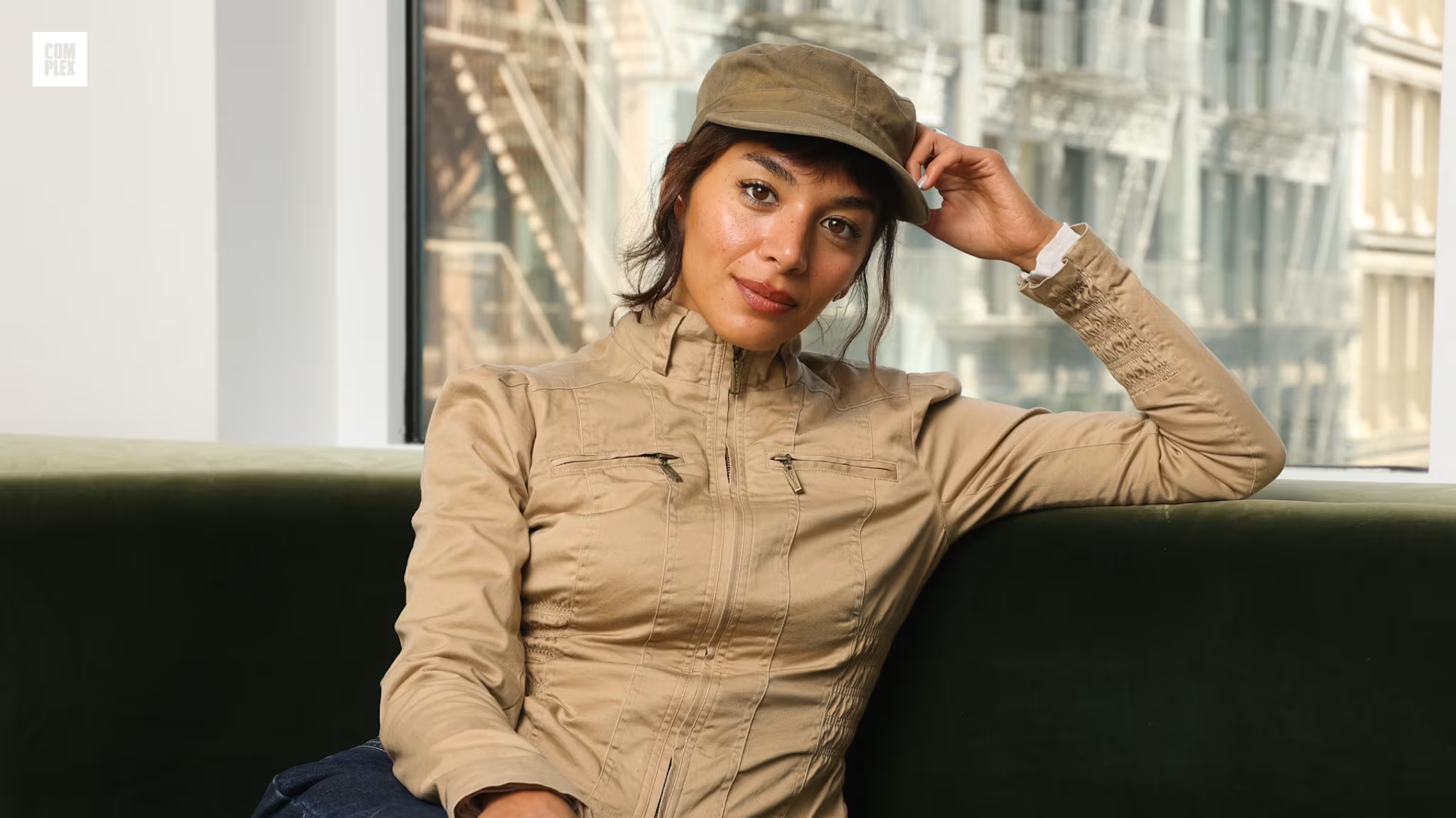
Tamara “Solem” Al-Issa tried really hard not to pursue art full-time.
At the start of our interview, Solem described going to dinner with another creative who felt the same way. “She was like, ‘I don't know if you relate to this, but I tried really hard to not be an artist. I really tried to go down the finance route,’” she said.
Solem wished she couldn’t relate, but, in fact, she felt the sentiment deeply. Alas, art has a way of having the final say. As a kid, Solem says she was curious and tactile, picking up bugs and examining things around her home in Saudi Arabia. However, that free and inquisitive spirit fell by the wayside when her family immigrated to Canada. Looking back, Solem didn’t know how hard that move would be, nor could she have prepared for it. She went from having shared experiences with everyone she knew to feeling alone and isolated in her new “home” of Toronto.
Money also became an issue. Like many people starting over, Solem and her family experienced lean times. So she decided that science—and the stability and security it might provide—would be her path. At the University of Toronto, Solem studied advanced human anatomy and worked in a morgue assisting with autopsies for a couple of years (wild, right?). But just because Solem didn’t imagine art as her profession doesn’t mean art wouldn’t take hold of her. During her first year at university, a time she describes as challenging, she was seeing a guy who suggested they attend a pottery class.
And that’s when the shift began. Slowly, yes, but it was still in motion.
She agreed to go, and inside a dingy, cramped basement with bad lighting, Solem fell in love with the discipline and its possibilities. It wasn't an immediate, I need to drop out of uni and devote my entire being to ceramics because I am now one with clay type of love. Instead, as Solem explained it, she simply wanted to perfect this new craft she’d been introduced to.
What followed was a series of small, scrappy but wise financial moves, like purchasing five secondhand wheels for $50 a pop instead of the couple hundred or even a grand that one wheel might cost. Managing a shared studio with other artists, taking six months to simply center the clay—a vital skill necessary for any ceramicist—and pushing through the tears and doubt that came along the way, and of course, savings, or as Solem refers to it, a 'float.' All these decisions were the impetus for a rewarding career even Solem didn’t see coming. It also helped create a solid financial foundation for the ceramicist that she’d later lean on.
Complex interviewed Solem about her journey to full-time artist for the editorial series entitled The First of The Month. In partnership with Credit Karma, this editorial highlights how financial momentum, no matter the size, builds your confidence—not only in your cash flow, but also in your creativity—and your life.
Solem committed to the craft she tried to run from… and we’re all better for it.
But why not let Solem tell it to us in her own words?
About three summers ago, I took a six-week ceramics course, and what I learned is that it might look easy, but it requires a balance of soft and firm. How long would you say it took you to get the hang of it and perfect your craft?
Since you took the class, you know what centering is when you're on the wheel. It took me six months to center. It's not easy, and when I was teaching classes, some people would get it right away, and they would think I was flattering them when I told them, ‘You're incredible. This is going to be very easy for you.’ And they'd be like, ‘No, you're just saying that, and you say that to everyone.’ And I always say, ‘It took me six months to center a single piece. So, I did not start out good at this thing.’
I've always been creative. I've always had a good eye. I've always had the passion, but technically speaking, I was not good when I started. It was hard work. It was a lot of tears, a lot of sleepless nights, a lot of questioning: why am I doing this to myself?
Before ceramics became your full-time profession, what were you doing to fund your passion?
I was working at a cafe in downtown Toronto; I was a swim instructor and a lifeguard. So, I had quite a few jobs. I was also a tutor.
And how did the people closest to you respond when you chose this path, and how did they support and shape you?
The people closest to me were so on board. They're not the same people I'm still in touch with, just different paths. But at the time, we were all in similar spaces. I think that most of my friends were up-and-coming artists at the time. They also wanted studio space. So when I first opened my studio, I was like, ‘Do we all want to go in on this together? I will manage; I will take on the studio responsibility.’ And most of them were on board, and we were all really young. We were all 20, 21. So yeah, I think they were excited for themselves as well, basically. It felt like a group project that I was spearheading.
Did your parents ever talk to you about money or teach you about money growing up?
Yeah, we had a lot of conversations about money. My parents are really different with how they handle money, so I think I grew up with a balanced understanding of it. My dad is a lot more impulsive with how he spends. My mom is more frugal, overly maybe. So, they were open about that with me, and they would jokingly criticize each other. My mom would be like, ‘Oh, your dad wants to buy that thing.’ And then he'd be like, ‘Oh, your mom doesn't want to spend anything on herself.’ So, I think I landed somewhere in the middle, but leaned more toward a saving mindset when I immigrated to Canada because I had to. They would never tell me, ‘Make sure you save.’ They would show me through how they handled money.
What did it feel like to buy your first wheel and set up your studio? And how many wheels have you had since then?
Actually, this is funny. I found five wheels that were all being sold for $50 from an abandoned school. So this is how I saved a lot of money, too. It wasn't just putting away money. It was also buying secondhand and refurbishing things myself. I learned how to repair wires. I learned informally and became an electrician, which probably isn't good to say, but that's how I chose to take on a lot of the technical side of things to cut my costs in half.
So yeah, I still use this wheel now. I rented a truck, drove pretty far, and picked up five wheels from the school for $50 each. Whereas normally one wheel will cost you maybe $1,500 to $2,000. I saved a lot of money there.
You said that you landed somewhere in the middle when it comes to your parents’ spending habits. So what does being on top of your money mean to you?
Being on top of my money means getting to a place where I feel like my money is not controlling me.
Dope.
I think it's easy for finances to take up our minds. They affect every single part of our lives. They affect us socially and emotionally. Sometimes it's just an attitude shift. It's not just the number that's in my bank account. Sometimes it's like, you know what? No, I'm going to do this thing, and I know it’s going to work out. And then it's like, yes, okay, I will go out with my friends tonight. It's this mental shift. That's what being on top of my money means to me.
You used the word “shift.” Can you think of a time when you noticed a real shift in your mindset as a result of being on top of your money?
I do, actually. It was 2023. I had just come out of a relationship, and it took me a minute to get back on my feet. I'm my own boss, so if anything happens in life and I can't make it, there's no sick leave. So, I have to create all the time, which means I always have to be mentally there.
I remember coming out of this breakup and feeling sorry for myself because I wasn't making any money. I then said to myself, ‘I have a studio. I have the power to turn this into a creative period.’ So I shifted that and used that emotional turmoil to then create things that all sold. That was a year where I really shifted my mindset.
What did the first sizable paycheck unlock for you professionally as an artist?
Bigger hauls. Going to the pottery supply store and just getting more things. So more exploration, really, because I would go to the supply store and I'm like, ‘Just get what you need and go home.’
So, before it was ‘We’re in and out’ now…
Exactly. We're not going to look at, ‘Oh, this might be interesting to try this material out.’ Whereas once I started making more money, I was able to drop more on my materials. And I think that an essential part of an artist is just permitting yourself to try new things even though you don't know if they're going to work or not. That's literally how all of our best ideas come out, and maybe 10% of them will actually pay it back, but most of it is experimenting. So once I started making more money, I was able to give myself more chances to try things out.
Now when you get a paycheck, how do you divvy it up?
I try to keep my savings at a certain number. Before, it was put away a little bit each month kind of thing; try to reach that number. Whereas now I try to keep a float. That's how I see it in my mind. So if I see that I'm under that float, which I am right now because I'm in New York and, damn, it's expensive out here, [laughs] that's okay. I have a show coming up next month, and I know what's coming in. So I kind of do this mental math where I'm like, ‘All right, so I know that this is probably how much I'm going to make in the next few months. Is it possible for me to bring that float back up to this number, the safe number that's in my savings and then some?’ I always think of ending my fiscal year with a little bit more than last year.
When you're 45, 50, what do you see for yourself as an artist?
I see myself outgrowing Toronto. I see this as kind of a next step for me, which is also tied to my finances. I think that’s part of why I want to grow this float so that my work can reach more international places, which has been happening over the past couple of years. I want to be able to afford to go with my pieces to these places. When I'm 45, 50, I see myself making larger installations, like 17-foot-tall sculptures.
Oh, wow!
Yeah, I don't want to be limited to the size of my kiln forever.
To learn more about Solem, head over to Complex YouTube to see her discuss her money moves on the latest episode of Stacked.