Key Takeaways
- TikTok agreed to pay Alabama $100 million and could owe up to $300 million more if it fails to meet new youth-safety requirements.
- The deal immediately caps children’s use at two hours daily, blocks access during school and overnight hours, and requires stronger age checks within a year.
- TikTok must also limit adults’ ability to find minors, alert parents to suspicious teen-adult interactions, expand parental controls, and ban cosmetic filters for minors statewide.
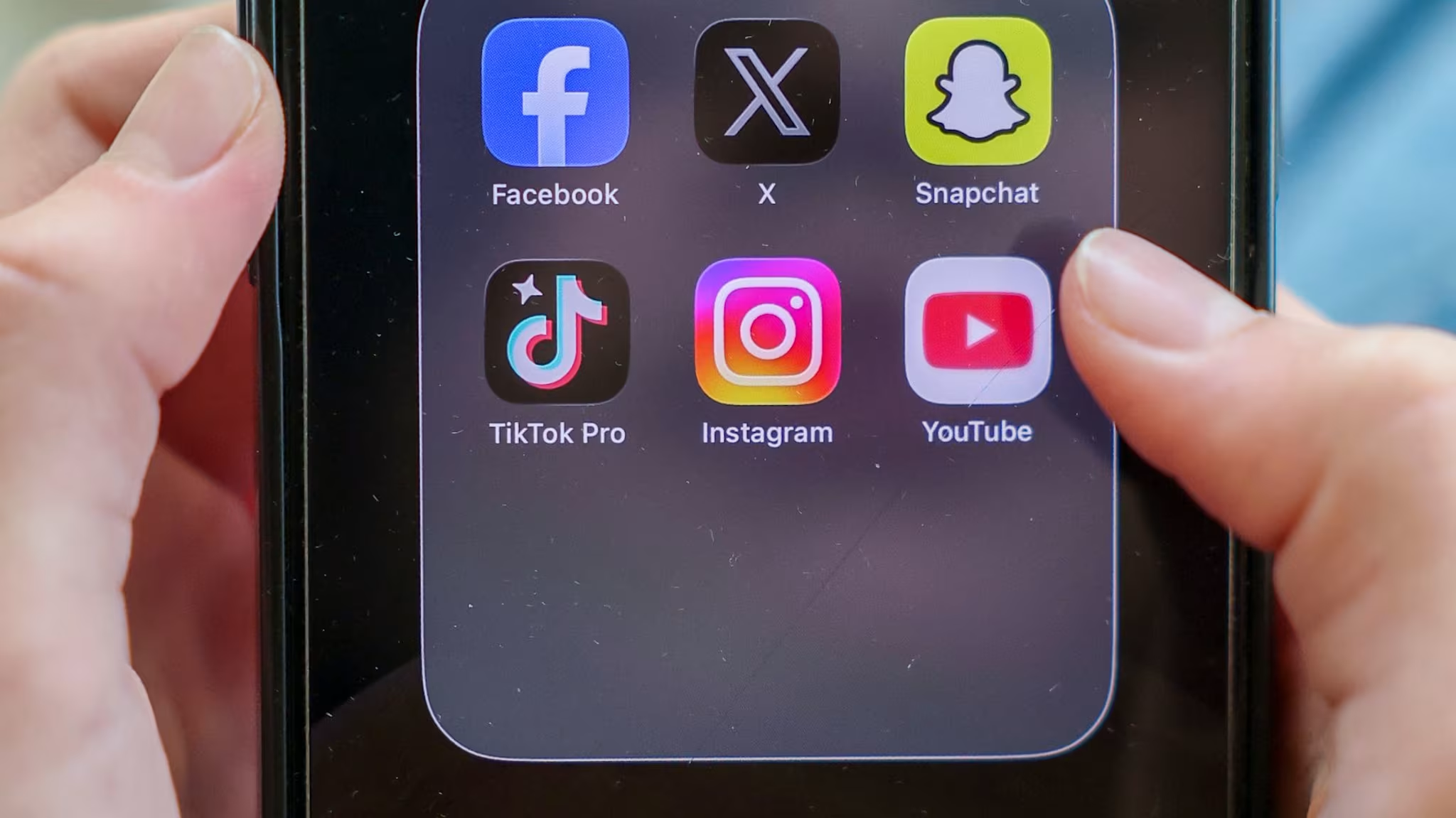
TikTok has agreed to pay Alabama $100 million and immediately put hard limits on how children use the app, ending a high-stakes lawsuit that accused the platform of building features designed to keep young users scrolling.
According to the BBC, the settlement, finalized just before a jury trial was scheduled to begin, is TikTok’s first with a U.S. state. Alabama will receive the $100 million within 45 days, and TikTok and its parent company, ByteDance, could be on the hook for as much as $300 million more if they miss the deal’s requirements.
For children in Alabama, the changes start now. TikTok must enforce a two-hour daily usage limit, along with blocks during overnight and school hours. The company has up to a year to roll out further requirements, including stronger age-verification measures intended to prevent younger users from bypassing the platform’s guardrails.
Alabama also secured major changes to how kids’ accounts can be found and monitored. Adults will face new limits on discovering minors’ profiles, while parents must be alerted to “suspicious interactions” involving teen and adult users. The settlement also gives parents broader controls over their children’s activity, restricts certain content, and bars cosmetic filters for minors statewide.
“This is very restrictive injunctive relief that’s going to require them to change a lot of the policies that we had identified as the culprits in what we call the war on childhood,” Katherine Robertson, chief counsel in the Alabama Attorney General’s Office, told the BBC.
TikTok said the agreement reinforces its ongoing safety efforts. “TikTok’s priority has always been fostering a safe and positive space where people can be creative, discover what they love, and connect with their community,” a TikTok USDS spokesperson said. “This builds on our commitment and core objective to continually enhance our robust safety tools to protect teens.”
The Alabama agreement lands at a pivotal moment for TikTok, which remains one of the most dominant social platforms in the world—and one of the most closely watched. The app has faced government-device bans across the United States, Canada, Australia, the United Kingdom, and European Union institutions over security and data concerns.
India banned TikTok outright in 2020, while users in mainland China access ByteDance’s separate domestic app, Douyin.
TikTok also recently emerged from a U.S. ownership battle after federal legislation required ByteDance to divest its American operations or face a nationwide ban. A new group of American investors now has majority control and oversight of TikTok’s U.S. data and algorithm, though ByteDance remains a minority owner.