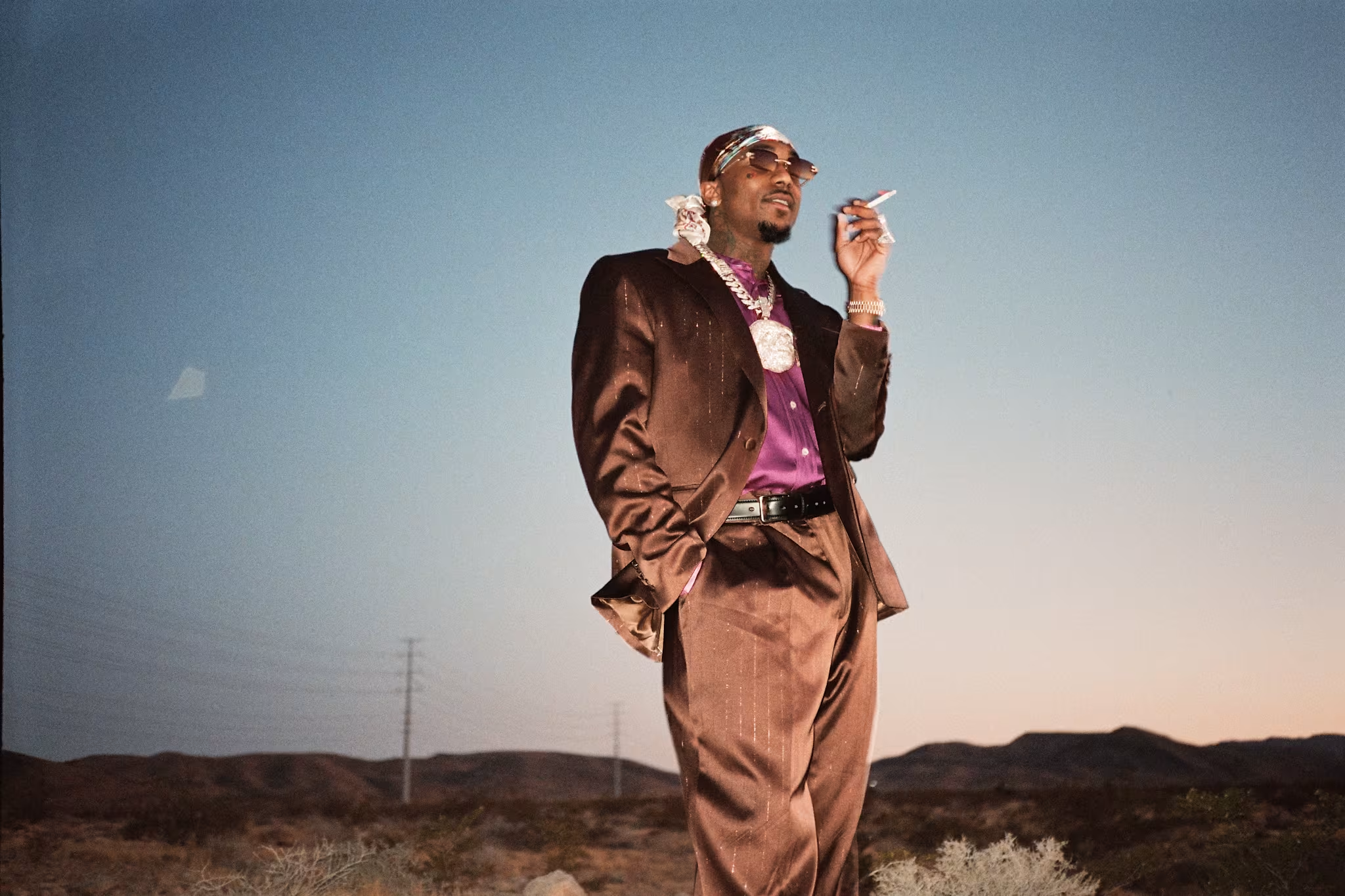
If UK funky ruled the summer, winter belongs to dubstep. The past few years have seen a glorious renaissance for the cavernous, 140BPM low-end rumble of dubstep, with originators like Skream and Benga back in action, books being published documenting the culture, and a new generation of innovators keeping the sound vital.
One such name is Hamdi—although, to be completely accurate, he’s been putting in the work for some time now. He first started making moves in the mid-2010s, coming up in an Oxford club scene that punched well above its weight (Sammy Virji being one of his contemporaries). Then, around 2021, when everyone was in need of a pick-me-up after being cooped up and going stir-crazy for the best part of 18 months, Hamdi came through with an almighty arsenal of slappers. “Skanker” was the one that broke through, but it was one of many, and dubstep wasn’t the only sound he was pushing. Even now, when we think of Hamdi, we tend to think of wall-shaking dubstep screamers, but 2021 alone saw him exploring cavernous atmospherics on “Inside”, 2-step bubblers like “Creepy Crawlers” and “Summer Fruits”, not to mention his Latin excursions across the Brazil and Cuba EPs.
There’ll be more of that further down the line, he tells me, but for now, we’re here to talk about his live shows and his latest banger, “Dubstep Proper”. I meet Hamdi at the Sony offices near King’s Cross in London. The frost hasn’t quite set in yet, but it’s on its way, and there’s a definite chill in the air. Hamdi, meanwhile, is a ball of energy, raring to go with some major shows fast approaching and a batch of new tunes ready and waiting. On the former, he’s currently in prep mode ahead of a massive show at The Warehouse Project in Manchester, before heading straight back down to London for the Outernet edition of Hamdi FC, where he’ll be joined by Flava D, Jaz Imsky and Sam Deeley. Which brings us to the latter. Out today is his new collaboration with Flava D and Riko Dan, “Dubstep Proper”. An absolute jawbreaker of a track, it’s Hamdi through and through: fat subs juiced up with Flava D’s signature bounce and a rallying cry from the London City Warlord.
Ahead of his Manchester-to-London double-header, Complex UK caught up with Hamdi to talk about his formative years in Oxford, the genesis of Hamdi FC, dubstep’s renewed global appeal, his lifelong love of grime, and why he’s looking to surprise listeners in 2027.
COMPLEX: Let’s start with the Outernet show on November 28, which is part of your Hamdi FC concept, right? Football culture has become quite synonymous with your identity as a DJ, from the shirts you wear during your sets to the fans who turn up to your shows in their own football shirts. Can you tell me a bit more about Hamdi FC, where the idea came from and how you’ve managed to bring these two passions of yours together?
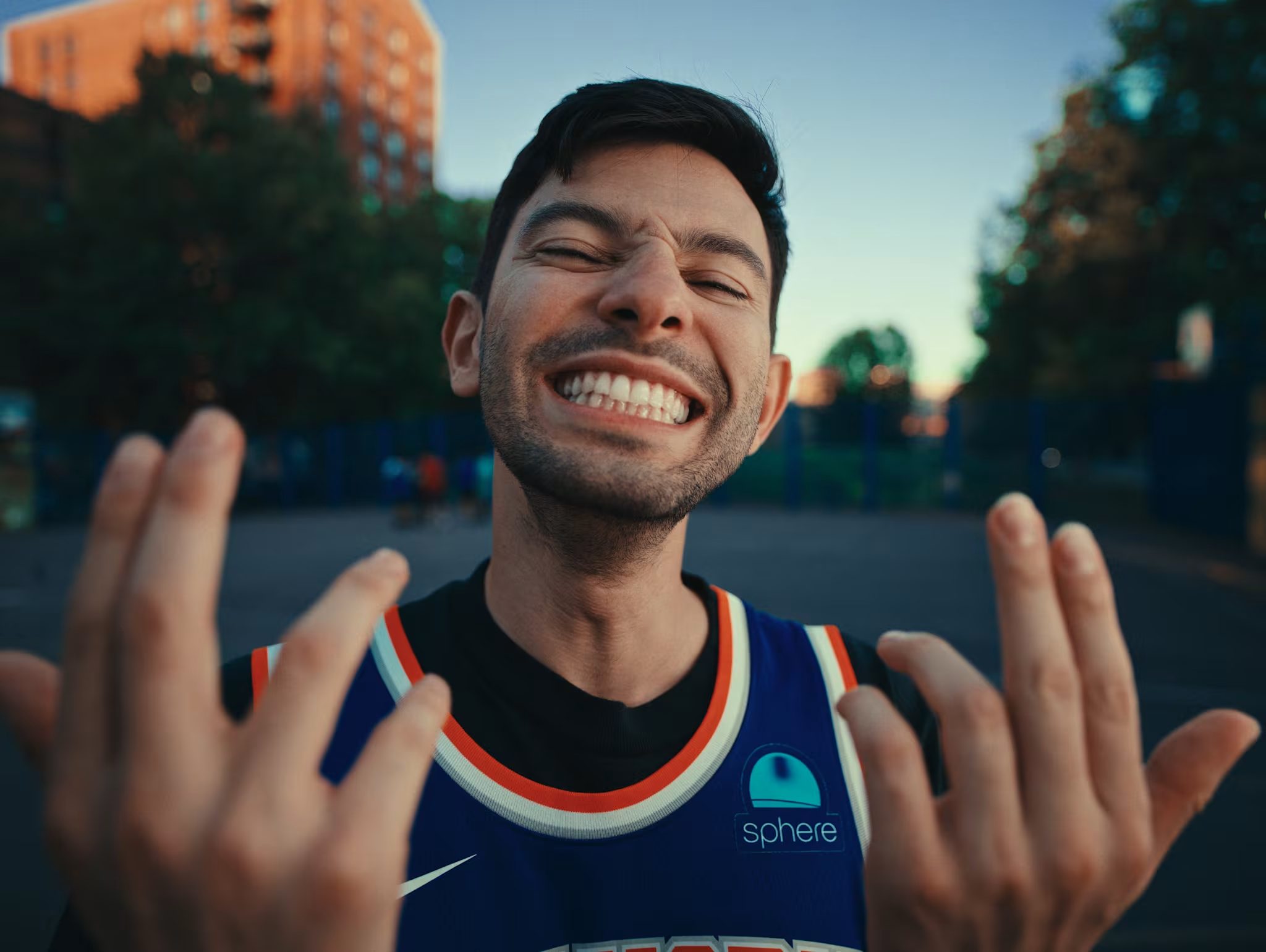
Hamdi: So, I’ve always been really into football—I’m a Liverpool fan and have been since 2003. I don’t know how it started, but I think for the first few sets I did, I just always happened to have a football shirt on. One of those early shows went really well, so I thought, “I’m just gonna wear a football shirt for every show now.” That would become my thing. It’s funny: I did it for, like, three or four years and no one really commented on it. No one noticed. But I just kept doing it, and then when I went to the States, where football’s becoming bigger, people started to notice and would wear football shirts to the shows themselves. It gradually became part of the brand. When we started talking about bigger shows and what they should look like, I figured something football-related would be sick. Like, what if I started my own team? So I was just like, “Hamdi FC—that’s kind of cool.” It’s been really fun building out the concept, creating a badge and everything.
So what can we expect from the Outernet show, and what sort of preparation goes into putting together a set for a show of this scale?
It’s gonna be high-energy. I want to keep the crowd bouncing and moving throughout, so there’ll be lots of genre changes, but still lots of dubstep, and just as much energy as possible. I’m a big prepper, so I like to practise a lot of the transitions and really tell a story when I’m building a set. I’ll think, “Where do I want to start the set? Where do I want to end it?” I’d say it usually starts off lighter, because I’ve got a lot of deeper dubstep that works better at the start of sets, and then it gets progressively heavier. If it’s just an hour at a festival, though, I tend to go absolutely nuts from start to finish. No filter!
When I think of your sets, I picture you standing in front of an endless sea of people. I mean, you’re playing to some seriously massive crowds these days. Was there a particular moment when you noticed a shift in the size of the crowds you were playing to?
Yeah, there was definitely a moment. I was lucky in that I started pretty young. I started producing when I was 13, and then I started DJing when I was 18. Between the ages of 18 and 22, things were building very slowly. But I had the experience of playing to smaller crowds, and even playing to no crowd at all, and I think that really set me up for what came next, because it went from nothing to 10,000 people in about a year after “Skanker” came out. That’s when things really shifted. Then, when I started going over to the States, there was another big jump. I’d never even played to, like, 2,000 people, and within the first few months of going over to the States, I was playing to 5,000, 6,000, 7,000 people. It’s weird—and I think a lot of artists will say this—but you actually get less nervous for those bigger shows. If it’s 300 people, you can see everyone’s reactions up close, but when it’s 7,000 people and you’re 20 feet away from them, it’s actually a bit less daunting because you can barely see them. Even now, sometimes it’s the really small shows that I get most nervous for.
Let’s take it back to the Oxford days. What was the local club scene like when you were coming up, and how important was it in shaping those early years of your journey as a DJ?
There was a really cool scene when I was starting out. There was a club called The Cellar, and the ceiling was probably no more than seven feet high. Everyone would be crammed in, and there was this little arch above the decks. If people wanted a wheel, they would just bang on the archway. It was probably 150-capacity max, but they would get some really good DJs in there. I remember seeing DJ Q there; Free Range used to put on a lot of shows there, and Kahn & Neek and people like that would come through as well. That was where I got my first taste of it all. I thought that was gonna be the club I’d always play at. Then, not long after I started DJing, they closed it! I had some amazing shows there. It was the place to go, and the scene’s really struggled since it shut. It’s a shame because Oxford has two really big universities and enough people to sustain a really cool scene, but it’s struggled.
Was The Cellar closing something of a catalyst for you to move on to the next chapter of your career? How did things develop for you from that point onwards?
That was an interesting time because The Cellar closed, and then within six months, I went to Sussex Uni in Brighton. I was already releasing music with Southpoint, who were Brighton-based, so it worked out well. That was when I started to really build my brand. I think the Sammy Virji collab came out around then, along with a few other tracks that did decently in the scene. I learned a lot during that time, started putting on my own events and, before I knew it, I was playing to 300 people.
So you must have graduated in 2020, right? What was going through your mind career-wise at that point, especially with the pandemic bringing the entire live music industry to a standstill?
Yeah, it’s funny. Just a few months before I graduated, I had it in my head that I was going to go travelling, see the world, all of that. I actually didn’t see music as a job at that point; it was just a hobby. I ended up working at a book publishers for a few years, went back to Oxford for a few months and then went to live in Brighton for another year. When Covid happened, I just stayed indoors making club bangers. I couldn’t really put them out, though, because all the clubs were closed, so there was no one to play them. That actually worked to my advantage because, when it was all over, I had three or four bangers ready to go, and that helped build momentum massively. I had the “Never Let You Go” edit drop in October 2021 and then “Skanker” in December of that year. Before that, it felt like things were stagnating, and then—bang! You never know when it’s gonna happen.
You’re someone I really associate with that post-lockdown era, specifically the sense of optimism and energy we all felt when we came tearing out of our homes, ready to dance and get back to festivals. I think the tracks you were putting out around that time really captured whatever was in the air.
It was just a really exciting time, I think, for UK music in general. It still is. It was also the start of breaking America becoming a real possibility. Before that, it was never really in the plans. I don’t remember people ever talking about getting big over here and then going over to the US. The two scenes were so separate, whereas now I think the US is really paying attention to UK music, which I think is really exciting.
Speaking of crossovers, I feel like there’s quite a bit of that in your sound. Dubstep is obviously at the heart of what you do, but there are elements of grime and bassline in the mix, too. How would you describe your sound, and how much of it is informed by the music you grew up listening to?
I’ve been making all sorts of genres. I’d say dubstep is what I’m most known for, but it’s definitely not the only thing I produce. I think I’d get bored if I was solely producing dubstep. Next year, especially, I’m gonna really try to put out as many different genres as I can and just see where that goes. I’m really excited to surprise the listeners a bit. In terms of grime and dubstep, it’s funny you should say that because grime was my first love. Before I’d even heard of dubstep, I was obsessed with grime. Between the ages of 10 and 13, grime was pretty much all I listened to. I’m 28 now, so that was between 2008 and 2011. I was watching SBTV freestyles all the time. Chipmunk was my favourite, favourite MC. It’s actually come full circle because I ended up doing a session with him recently, and that was a real pinch-me moment.
When I look at where I am now, I feel so grateful that I get to work with all these artists I was listening to 10 years ago. D Double E, P Money… It’s unbelievable. If you’d told me 10 years ago that I’d be regularly making tunes with them, I’d never have believed you. I’ve been lucky enough to work with a lot of big DJs, but it’s the MCs that actually get me the most excited because that’s my childhood. Mixing grime and dubstep has always been part of the UK scene, and I really want to be a part of that tradition as well. That’s something that excites me a lot. A sick, sick vocalist on a good dubstep beat is a match made in heaven.
When it comes to collaborating with other producers, particularly those who have a distinct sound of their own, what do you think makes for the ideal collaboration? How do you find that sweet spot where both of your musical identities come through without one overpowering the other?
If it’s two different styles, it’s about how you bring those two together. Something I’ve found works really well in dubstep—because it’s very sound design-based—is a sort of call-and-response thing, like I did with the Simula one or the LYNY one. It’s like his bass talks, then mine talks. It’s almost like a sound clash. That makes for a really cool collab because you get the best of both worlds. I love it when you find that cool, natural way of bringing your two styles together without forcing it.
You’ve got The Warehouse Project in Manchester and then Outernet in London on the same day. That’s a pretty hectic schedule! Who have you got joining you across the two shows?
I’ve got Flava D with me at both shows. She’s on earlier than me at Warehouse and then travelling down as well. At Outernet, I’ve also got Jaz Imsky and Sam Deeley, the latter being someone I’ve really respected for years.
There’s a nice mix of established names and newer talent on the Outernet line-up. How hands-on are you when it comes to curating these Hamdi FC shows, and what do you look for in the DJs you bring on board?
Yeah, with the Hamdi FC shows, I’m more hands-on with the curation. I’m a bit neurotic with it sometimes. I like the night to flow in a certain way, and it’s worked out sick.
Hamdi FC has become a whole entity in its own right, beyond just you getting behind the decks. Looking beyond the Outernet show, what else have you got planned for it, and how do you see the concept evolving over the next few years?
I did a full tour of it last year and I think, moving forward, I want to be a bit more selective. These shows are a huge undertaking, so I think we’ll just do a few cities each year, but I also want to open up some new markets with them. I’m trying to keep it as special and as rare as possible so that when you’re at one, it really means something. Whereas if there were 50 of them, you might be tempted to just wait for the next one. We’ve already locked in some really exciting ones, and I’m already thinking about the year after. It’s exciting.
Hamdi FC isn’t your only outlet for experimenting with the live experience. Tell me a bit about Anywhere And Everywhere, the other concept you’ve been developing.
It’s a concept I came up with where I have to change genre with every track. I did a tour of it earlier this year, and it was really fun. It was a complete experiment, so the first few shows were pretty chaotic, but by the end of the tour, it was in a really good place. I want to keep that rare as well, and only do it at specific times. There will still be festivals and the odd headline show in between, but that’s my approach now: just being selective and deliberate with everything I do.
With Anywhere And Everywhere, are you literally switching genres with every track? I imagine there’s a fine balance between showcasing the breadth of your musical taste and making sure the dancefloor is still moving. Things must get pretty out there by the end of the set?
[Laughs] I was thinking about this when I was planning it. If I was literally doing one track per genre and then moving on, I could never pick just one dubstep track, so it’s more of a way to make sure I keep switching things up. When I was testing it out, I was playing, like, 30 genres in one night. I played some Usher, some Arctic Monkeys, and I even played some psytrance. It was literally going everywhere. I haven’t gone as out-there as you might expect, though. It was still a club set, just one where I switched genres with every track. There were some fun transitions that I put in, but I wasn’t going from pop to Armenian jazz. It was still very much club-focused. I didn’t want people to come to the show and go, “OK, he’s played every single genre and that was impressive, but it wasn’t actually fun”, you know? Come to a show and see for yourself!