UK funky is one of the most beloved sounds in British dance music, and a perfect example of what British musicians do best. From jungle to garage to grime, Britain has a long history of taking its place in a global musical conversation and adding something entirely its own.
These sounds have never existed in isolation: they travel, cross-pollinate and evolve, shaped by the people who discover them and the places they land. And UK funky emerged from this same exchange. Rising out of the Black London club scene in the mid-2000s, UK funky’s roots stretched from soulful house and broken beat to the South African sounds finding their way into the city, as well as the grime that had come before it. But the producers, DJs and MCs behind it weren’t simply recreating what they heard—they were responding to it, experimenting with it and building something new. The result was a sound with its own rhythms, basslines and MC style, born from the unique energy of UK dancefloors.
DJ and producer Supa D has been at the forefront of UK funky since its earliest days, back when Motorola Razrs were the phone to have and MSN was all the rage. Starting out DJing jungle music at the age of 13 across London, he worked his way up through the scene, playing house on his radio shows by 2005 as UK garage’s biggest rooms began to close. In the years that followed, funky found its footing in sweaty club nights and packed student venues across the country, cementing itself as a UK staple.
Today, a new generation is carrying the genre forward, and among its most visible names is Bristol-born producer Wilfy D, whose R&B-licked track, “IDKW”, made major waves across UK clubland in 2024 with the help of the brilliant new dance stable HOLD A CORNER. Drawing on everything from UKG and funky to soulful and Afro-house, his music brings a fresh perspective to the sounds that came before him. His latest project, RITUALS (dusk till dawn), takes that approach even further: across eight tracks, Wilfy D moves between different corners of UK club music, bringing acts such as Lancey Foux, Pa Salieu, Crazy Cousinz and Amaeya into the mix to truly great effect. It’s a reminder that UK funky has never been a fixed sound, but one that continues to evolve with each new generation.
The scene has changed, and so have the ways its music is made, shared and heard. But what does it take to keep a sound alive across generations? What should stay the same, what can change, and what infrastructure does the scene need to sustain itself?
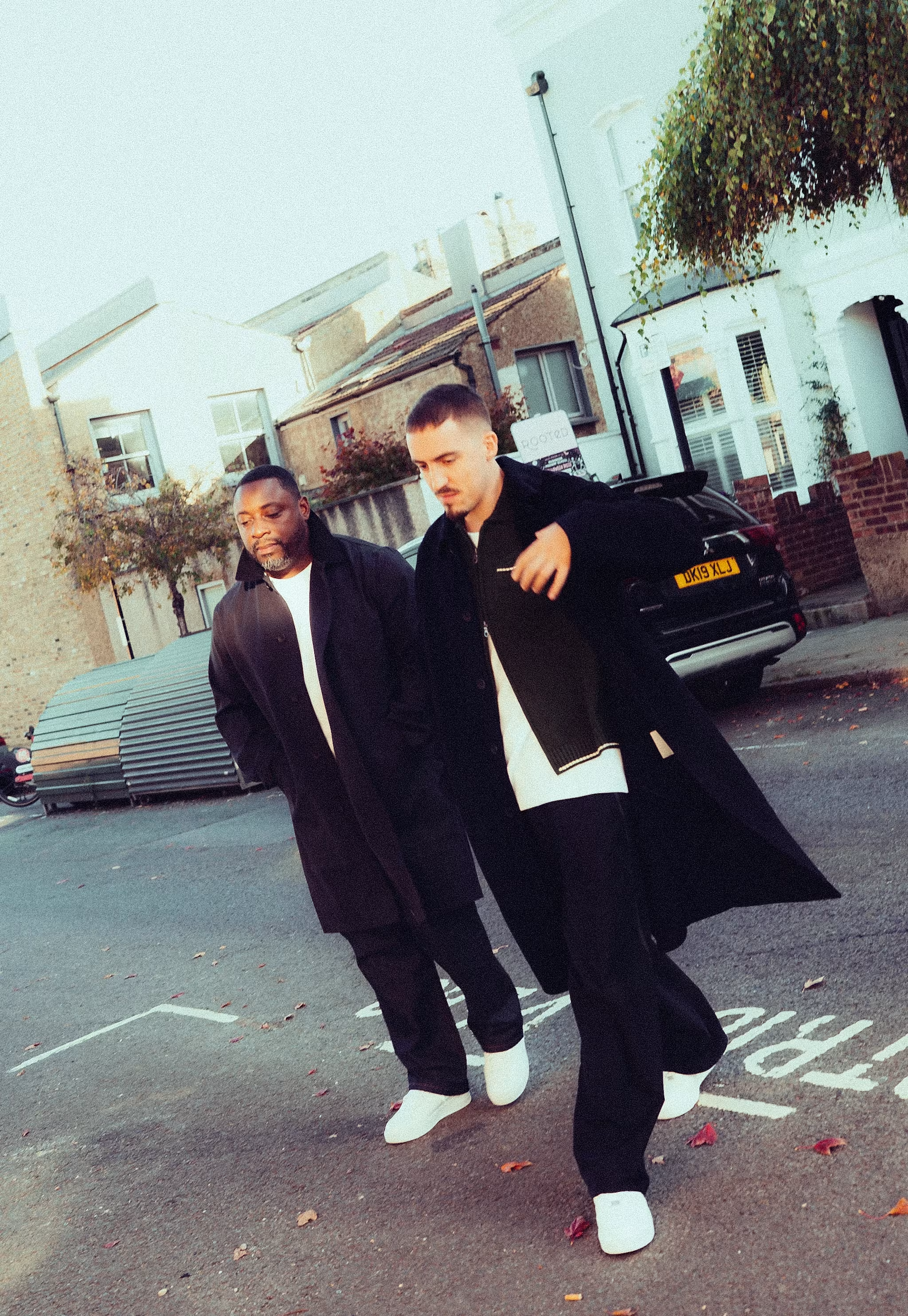
To find out, we brought the two generations together to challenge each other. This is Supa D and Wilfy D in conversation…
Supa D: Funky means something a little different to everyone, but what does it mean to you? And how do you know when something feels like funky?
Wilfy D: It’s soulful, but it’s also still a little bit gritty. It’s a kind of boisterous UK house music. In the same way that we took US garage house and made it UK garage, funky was a uniquely British, quite London-centric take on soulful house and broken beat. Then grime comes into it as well. There’s a level of fun to it, too. It’s fun and gritty.
Supa D: Is there anything from the original scene that you wish you’d experienced firsthand?
Wilfy D: Yeah, I’d definitely say I didn’t go to any UK funky raves. By the time I was going out, that scene had kind of been and gone a little bit. I was in my teens, enjoying it from a distance. I would have loved to see it all come together in that moment when it was fresh, because right now, a lot of people younger than me, as well as people my age, love funky. But it’s a thing from back then. I just think it would have been mad interesting to experience that moment. Imagine hearing it for the first time and just being like, “What is this?”
Supa D: One thing I wish was still around is vinyl. For one, it separated the men from the boys. Two, I’m passionate about the whole DJing thing: going out, looking for tunes and breaking them in the scene. That’s what we’ve always done, innit? Go out and find music.
Wilfy D: I hear that. When I started, I worked in a record shop in my late teens and early twenties, and I was 100% vinyl when I was getting into it. If I went to another city, I’d head straight to the record shop and dig for records. I’d buy them on Discogs and save up for them. I was so precious about my tunes. It’s so much more accessible now, and I think that’s great because it makes it easier for people to get into DJing. But to get good at mixing vinyl, you have to put in quite a bit of effort to learn how to beat-match. I do think it’s a lost art. It’s an amazing format, and I worry that it gets overlooked. There’s a level of digging that I really appreciate. Everyone wants the new song that someone played, and everyone wants to get their hands on it. But there’s so much incredible music out there; you just have to look for it.
Supa D: Agreed. Another thing, for me, is headphones. When someone asks me, “What do you think of that DJ?”, and I see they’re not using headphones, I can’t really rate them because, to me, they’re not doing the real thing. All you’re doing is collecting tunes, if anything. Moving on, what do you think an rapper brings to funky that a traditional vocalist perhaps doesn’t?
Wilfy D: That’s a good question. I guess, for me, it’s an energy thing. Rappers talk about certain things that most of us don’t. Singers don’t tend to touch on those subjects either. They tend to focus on one thing, whereas rappers can talk about a whole load of other madness. It might not all be bad; it might be funny. But they bring something different. I recently had the pleasure of doing a track with Lancey Foux and Pa Salieu. These aren’t traditionally funky rappers or dance rappers at all, but what’s so cool is bringing these different cultures together. They both have a deep love for dance music, house and funky, even if you might not know it. The way they bounce on a beat like that, and what they talk about, is sick. I’m a fan. I think that’s one of the core things about funky. You don’t have many other cultures where you can get someone spitting like that over a dance beat, or bring grime energy to it, and have it work so well. It’s hard to nail.
Supa D: Yeah. It can’t just be anyone jumping on it.
Wilfy D: It can’t be. And then there’s the difference between an MC and a rapper, which is a whole other conversation.
Supa D: Exactly. We’ve always had MCs on the mic, so having a rapper on a record is something different. But how would you describe the difference between the two?
Wilfy D: For me, an MC is a host. From MC Crew to Terminal 4 now, they’re there to support the DJ as much as needed, bring up the energy, know the tunes and know when the wheel-ups are coming. They make the experience much more special for the crowd.
Supa D: I also think that, with a rapper, you have to really listen to what they’re saying. Sometimes I love an MC, but when I hear them on a tune, I think, in all honesty, I’d rather hear that in a club than on my Spotify. Of course, there are people who can do both.
Wilfy D: I’d say, fundamentally, one feels live and the other feels like the studio to me.
Supa D: Do you think that, because this whole tribal funky scene is blowing up right now, rappers are jumping on it just to stay relevant?
Wilfy D: Look, whenever a sound takes off, more people are going to pay attention to it. The bigger it gets, the more eyes are on it. I can’t really speak to people’s intentions, though. I guess that’s down to the individual.
Supa D: Who do you think makes the most sense on a funky tune? What’s the criteria for you? Personally, I think it’s someone who’s a versatile rapper. You can usually tell from the sort of things they’ve done in the past, particularly their party tracks, and whether they understand what works in that setting. You’ve got someone like Chip, for instance, who can come onto a track and bring party vibes. It depends on the artist, whether they understand the scene, have experience making party tracks and know what it’s about. This scene is about parties and good vibes, innit?
Wilfy D: Yeah, I think Chip’s a good example. Ms. Dynamite is part of that lineage of, I guess you could call it grime, but it’s really about that style of energy. Dance music is huge in the UK. We’ve been doing it for a long time, and crossover has always been a big thing. But that doesn’t mean everyone can do it or do it well. I think, sonically, it does come from that world. But outside of rap, when I work with artists in the studio and we’re making house, funky or whatever, I can tell when someone has been raving or goes raving, and when they haven’t.
Supa D: Records used to break over weeks or months through DJs and radio. Now, they need a moment that lasts seconds. Do you think funky would have survived the TikTok era?
Wilfy D: Honestly, yeah. Old funky tunes are flying on TikTok. It works, innit? But that doesn’t necessarily mean they’d survive outside of TikTok. That’s another question. Making music for little videos and short-form content can make a tune go viral, but will it live in the clubs? For me, a tune has to work in multiple spaces. Obviously, you can’t ignore social media, but it has to work in clubs and, ideally, on the radio too, although radio doesn’t play the same role it used to. There’s so much more to music than TikTok and social media. But do I think funky would work in that world? Yeah, it lends itself to it pretty well.
Supa D: I feel like if TikTok had existed during the funky era, the music probably would have been even bigger. Think about all the different dances and skanks [laughs]. I reckon there would have been loads of trends online, and that would have helped it grow even more. It’s not necessarily about quality control, but you can see how those things could have made it something even bigger.
Wilfy D: Yeah. If “Migraine Skank” dropped now, it would have been big on TikTok.
Supa D: It would be all over TikTok! Everyone would be doing the dances. It would be massive, even though it was already big. The landscape for making music has changed a lot with social media. What are you doing now that you wouldn’t have needed to do ten or fifteen years ago?
Wilfy D: It obviously comes back to content, which feels like the most powerful tool for reaching new audiences and getting your sound out there right now. Previously, labels had a lot more relevance; they had a lot of power—or perhaps not power, but credibility. Radio was important too, although getting airplay was difficult because you had to pay radio pluggers a lot of money, and not everyone could afford that. Now, it’s quite sick that there are free tools that give everyone a chance to put their sound out there and see what happens. But that also means that, as an artist, you have to navigate all of that. It’s really cool to see how younger artists are using these platforms. They’ve grown up with these apps, so using them is second nature, whereas other artists have to learn how they work and get on board. But that’s just part of how we receive music now.
Supa D: Yeah. Back then, it was either radio or handing out CDs with your mixes and things like that.
Wily D: Yeah, it’s a very different era. All that stuff is still relevant, but I’ve had tunes playlisted on radio, and while it’s great, it doesn’t necessarily bring in loads of new listeners in the way it might have done once upon a time.
COMPLEX: For both of you, do you think the earlier generation of funky got anything wrong when it came to ownership, labels, documentation, going international or the business side of things?
Supa D: I think quality control is the main thing, alongside guidance on how to channel everything in the right way. Back then, there wasn’t much guidance, to be honest. There wasn’t anyone to say, “Register this. Do that.” Everyone was just quick to start a tune and send it straight to someone to play. Sometimes it wasn’t mixed down properly or even finished.
Wilfy D: Yeah, I’d say today we have a lot more access to information. In terms of the industry, as far as I know, people aren’t getting screwed over by labels in the way they used to. Obviously, I wasn’t operating back in the day, but people seem a little more clued up now. There’s a lot more information about what things mean. But you still need support as an artist. At some point, everyone is going to need people representing them. Business-wise, it’s hard to handle those negotiations yourself. I think you still need those fundamental things around you. Every artist who gets to a certain point is going to need that support.
COMPLEX: Can UK funky become a global genre in the way that Amapiano or Afrobeats have?
Supa D: I reckon it’s like anything else. It takes that one tune. There were tracks back then that blew up, but this is a new vibe and sound now. It just takes one to blow up in that way, for everyone to open their eyes and think, “What’s this? What sort of sound is this?”
Wilfy D: I agree. First and foremost, it’s about the music. But I also think the genres that are doing really well right now, like tech-house and Amapiano, have a lot of infrastructure around them. That might be Instagram pages reposting the music or big raves happening around the world. It’s going to take the music, but it’s also going to take a bit more than that. It’s a movement. Obviously, the music has to lead it, but I think it’s going to take a bit of time, personally.
Supa D: Exactly. When people compare funky to other genres that have blown up, like garage, you have to remember that garage was much bigger and has had a longer legacy. That’s why they can do shows at the O2 and things like that. There were loads of original tracks, edits and enough music to carry the scene. So many original tunes that they could put on a whole show at the O2 with all the artists. We couldn’t do that with funky today. If you look back at any genre that has really stood the test of time, it had original music as well as remixes and sampling. But in terms of the craft, going back to quality control, it’s important for artists and producers to refine their skills and get into the studio. You learn how to mix, and I think it’s important not to lose those skills. The craft is too easy to overlook now because a lot of people just want a quick fix. But it’s a new day, and I have high hopes. We will see!