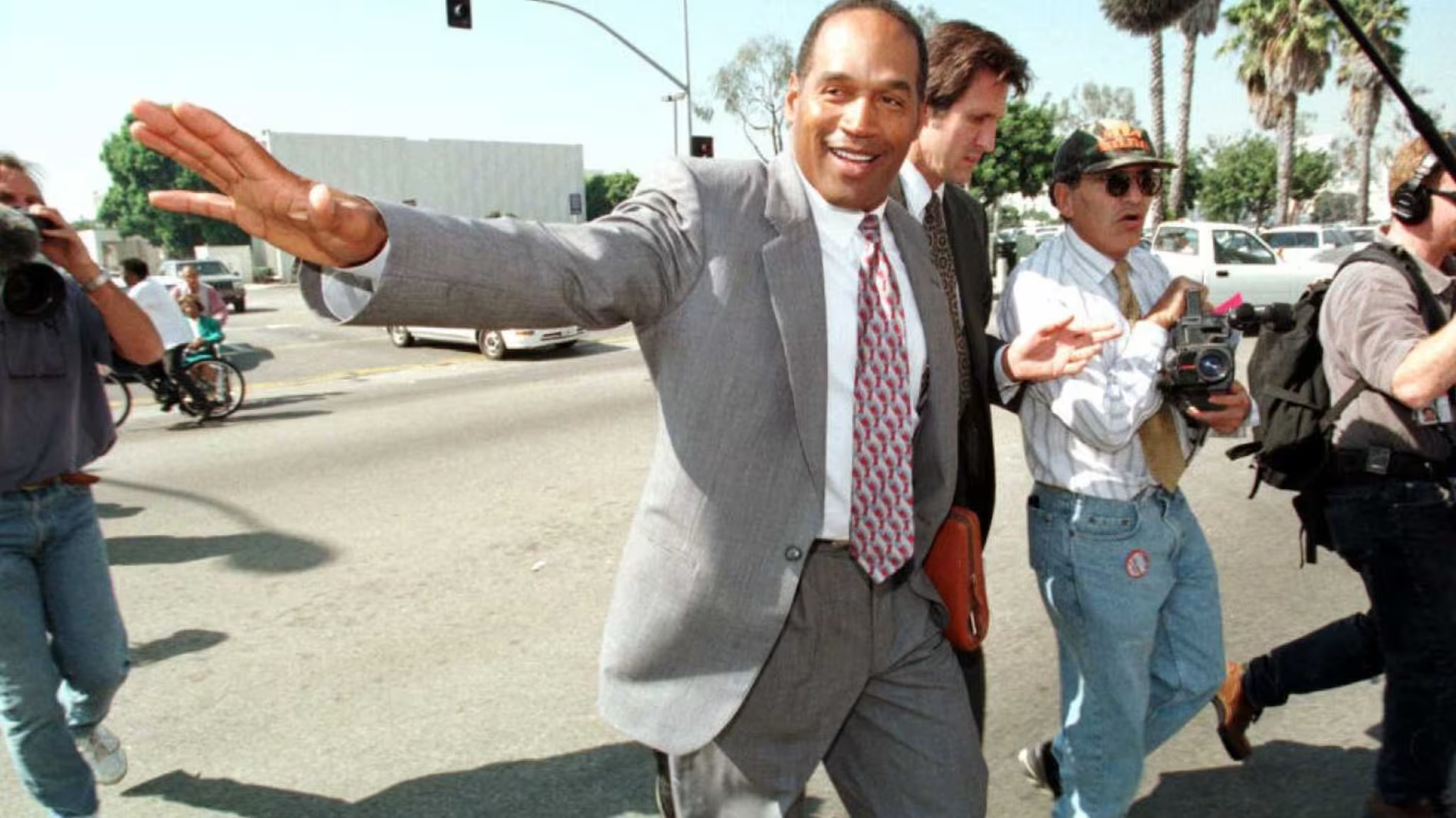
The O.J. Simpson debate isn't ending with the Buffalo Bills' decision to leave the Hall of Fame running back out of the team's new stadium tribute. Instead, that choice has sparked public pushback, with fans and community members gathering signatures on a Change.org petition urging the franchise to reverse course and include one of the most accomplished players in team history on the new Highmark Stadium Wall of Fame.
Protesters assembled outside the stadium on Friday, July 10, arguing that Simpson's football legacy should remain separate from the controversies that later defined his public image. Among those speaking out was former Erie County legislator Betty Jean Grant, who questioned why the franchise chose now to make the change after decades of recognizing him.
"When the jury acquitted him, the issue was not raised to take his name off, as they should not have," Grant said, per Spectrum News. "If for 32 years his name has remained on the Wall of Fame, why now?"
The exhibit will recognize members previously featured on the team's Wall of Fame while serving as a year-round gathering space anchored by the Bills' signature bison statues. Team officials said Simpson would not be part of that display.
"We have made an organizational decision that he is not a fit to display inside our new stadium and family circle," Bills president of business operations Pete Guelli said in a statement announcing the decision.
Reports indicated the organization debated the issue for months, with designers preparing plans for both scenarios before leadership reached its final conclusion.
Controversies aside, Simpson remains one of the greatest players in franchise history. Drafted first overall by Buffalo in 1969, he spent nine seasons with the Bills and became the first player in NFL history to rush for more than 2,000 yards in a season, finishing with 2,003 yards in 1973 while earning NFL MVP honors. He rushed for more than 10,000 yards in a Bills uniform and was inducted into the Pro Football Hall of Fame in 1985.
But Simpson's legacy extended far beyond football. His 1995 murder trial following the deaths of Nicole Brown Simpson and Ronald Goldman became one of the most closely watched court cases in American history.
Although he was acquitted of the criminal charges, a civil jury later found him liable for the wrongful deaths and ordered him to pay $33.5 million to the victims' families.
He died of prostate cancer in 2024 at age 76.