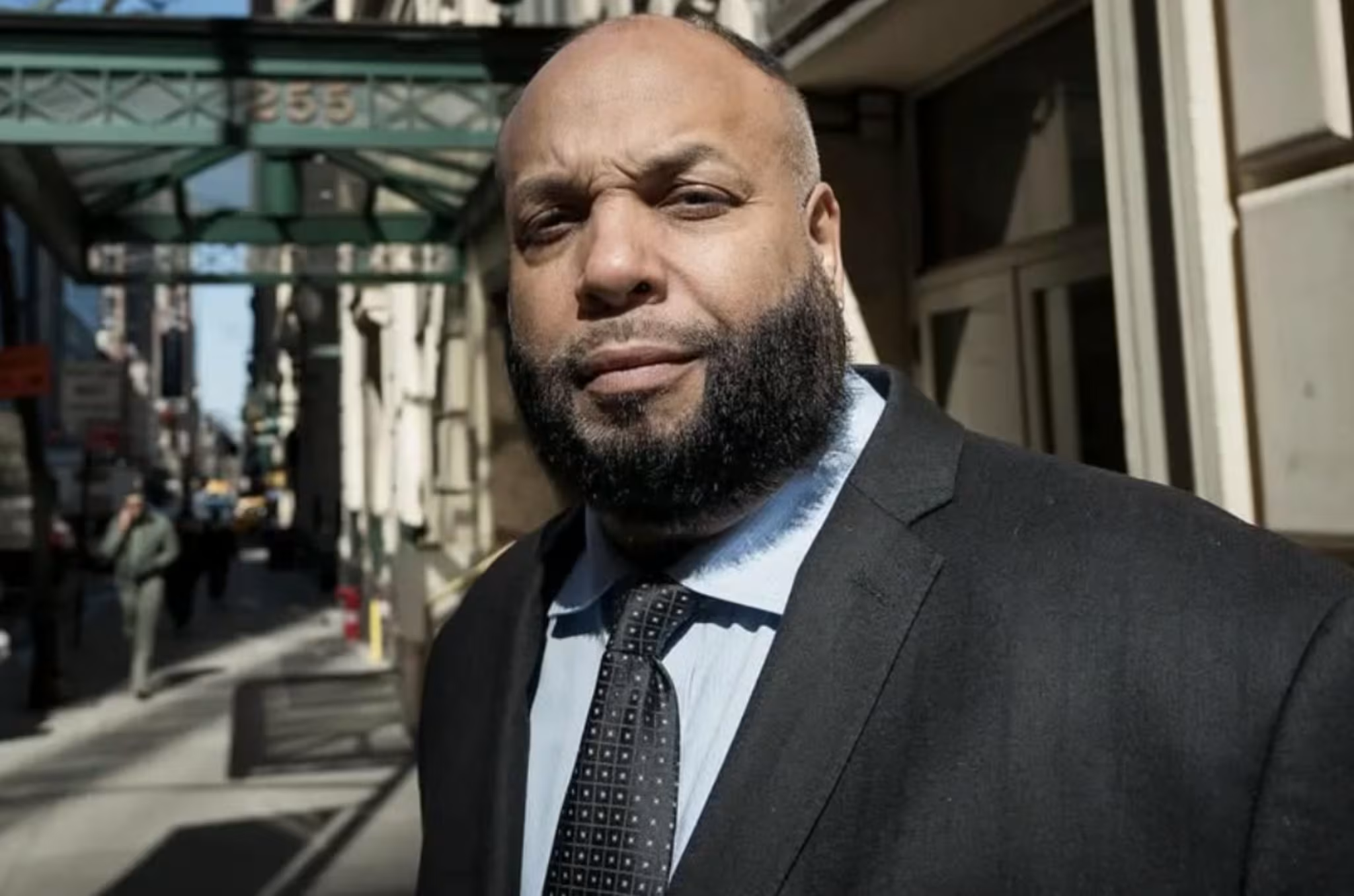
My relationship with Derrick Parker was always complicated. He just didn’t know it.
As a reporter and podcaster who has specialized in the intersection between hip-hop and the criminal justice system, I’ve interviewed Derrick many times over the past seven or so years—so many that I honestly don’t even remember exactly when I first got in contact with him.
A former NYPD detective, Parker was, as he proudly billed himself, the original “hip-hop cop”—a one-man intelligence operation within the NYPD, dealing specifically with the rap world. His efforts were so successful that even though he retired from the force in the early 2000s, to this day, a version of what he created still exists within the department, officially named the Enterprise Operations Unit. The EOU is supposed to be focused on all genres of music, but no one inside the NYPD or out is under any illusions about its true focus.
Parker, who died on July 24th at 65, never backed down from the idea that he was helping the music and culture he legitimately loved by gathering files on and surveilling its participants. I think that belief, that need to prove himself, is in part what kept him so accessible to reporters like me.
Derrick Parker, though decades removed from the NYPD by the time I met him, was a cop at heart. Talking to him for any length of time threw you into the middle of internecine department rivalries: this supervisor was incompetent, this cop was jealous of that one. He also defended the job, even when he felt that he was asked to do things that were over the line, like the time he says he was ordered by then-mayor Rudy Giuliani to find a reason—any reason—to arrest a member —any member—of a rap group that had made a song about him getting shot. He did it, of course, and the dueling versions of that arrest I heard from Parker and the rapper in question were some of the most amusing moments I’ve ever had in my professional life.
As that anecdote indicates, Parker could be brutally honest about aspects of the job that could look unflattering to anyone who wasn’t wearing blue. One of the most-cited articles I’ve ever written (this one), about the EOU, gained a lot of its power from Parker openly admitting that if the NYPD doesn’t want a rap show to happen, they will threaten the club owner with a raid from a myriad of different city agencies.
“This is how you hurt the club,” he told me. “You approach them and you tell the clubs, ‘If you allow this rapper there and, God forbid, he shoots somebody or something happens, we're going to take it out on you.’ …If you defied the police, that could happen.” This was the same interview where he openly admitted to once having placed an informant in a rapper’s entourage.
And yet. Parker played a fascinating role in the Jam Master Jay murder case, intervening—much to prosecutors’ annoyance—on behalf of one of the witnesses, and speculating (correctly) in public about the identity of the killers, years before anyone was arrested.
In an irony so deep I’m reluctant to even begin to characterize it, the Black man who created files on rappers for the NYPD was a giant hip-hop and R&B fan—and even, briefly, a singer himself. Before he was surveilling rappers, he was hanging out with them at conferences and in nightclubs. In fact, he always positioned his original decision to begin to spy on rappers as coming out of concern for them—that he noticed the people around them at night were the same shady people he saw during his day job as a Narcotics detective.
Parker told his story in his book. But he also told it over and over again in documentaries and in interviews—including, multiple times, with me. One of those interviews was for a planned narrative podcast series about hip-hop and policing that sadly never got completed. I intended for that series, whether or not Derrick Parker himself ever listened to the final product, to be a way of talking back to him.
I wanted the series to serve as an argument about why he was wrong. About why spying on the hip-hop world didn’t protect it at all, but in fact made things a lot worse for people inside and outside that community. About how, once you start spying on a few people, there’s always a reason to spy on more, and more, and more. About how, if you’re watching rappers, then you have to watch their entourages, and the people at the clubs, and their friends, and the drivers, and the DJs, and the promoters, and, and, and…the circle keeps widening, and there’s never a logical place to stop.
I hinted at that argument to Derrick. I may even have said parts of it outright. But I didn’t truly get to lay it out to him. I didn’t get to tell this gentle, friendly, funny, reliable man, who always picked up my phone calls with an excited “Shawn!” and who was ready with some inside information or the perfect quote, why I believe he hurt the music and culture he claimed to love. It was never the right time. I always needed another interview, another tip, another contact. I’ll make my big argument later, I thought. When the series is finished. Now I’ll never have the chance.