Skepta: Microphone Champion (Cover Story)
For Complex UK’s inaugural cover story, the grime and fashion icon reflects on fame, fatherhood, artistic freedom and his brand-new album, ‘The Fork & Knife’.
Joseph JP Patterson
Photography By: Gabriel Moses
Complex UK is proud to introduce Skepta as our debut cover star! Having championed the grime icon since the day we launched in 2014, we couldn’t think of a more fitting talent to grace our first cover. Special thanks to Levi’s and Timberland for their support. Skepta’s new album, ‘The Fork & Knife’, is out on November 6.
***
Skepta is pulling up to the airport, en route to Thailand for a short but well-deserved wellness break, when his publicist, Kiki, connects us over the phone. “Skep, this is JP from Complex,” she says, setting the convo in motion, but he’s quick to jump in: “Yes, JP, formally from Complex, but that’s my bredrin!” We all laugh. But, then again, we have known each other for around 20 years.
I wasn’t able to make Complex UK’s first-ever (!) cover shoot with Skepta and Gabriel Moses, thanks to that wretched Ibiza flu (if you know, you know); Skep had only just recovered from it himself, so he knew the struggle. But to put our history into perspective, we have to go back to the mid-2000s: I first met the artist born Joseph Junior Adenuga in 2006, through a graphic designer from his local area in North London named Diana ‘Sugacane’. A die-hard grime fan, she would drive me, then an aspiring grime blogger, established grime blogger Hyperfrank, and graphic designer Chris Charalambous up and down the UK to support Skepta and his crew, Boy Better Know—arguably the most important crew in grime history—at their live shows. Whether it was Brum, Leeds, Manny, or somewhere in London, we’d make sure we were there: front and centre, cameras in-hand.
But my real introduction to Skepta’s greatness came a year earlier, in 2005, when, aged 16, I watched him tear down Club Teeze in Northampton. There was something about that performance—the way he commanded the room—that stayed with me, and many others who were in attendance that night. I was living and breathing grime at the time, and that event inspired me to launch my own night, ChockABlock, in 2007. And who headlined the very first one? You guessed it: Big Smoke himself. I’d go on to book him a few more times, and I’ve supported him from afar ever since. A lot has happened in the years since, of course—from those early grime days to high fashion’s Front Rows, festival main stages to his own Más Tiempo house movement, Skepta, who recently turned 44, has continued to reinvent himself, inspiring many of us over 35 to keep the dream alive and never stop chasing it.
When we get talking about the moments that have shaped his career, Skepta points to 2012’s Blacklisted as the real turning point. Having escaped a record deal that left him feeling trapped creatively, he found himself back at his parents’ humble abode in Tottenham, making music from a mattress on the floor. “I just remember that feeling of being liberated again,” he tells me. “Even Konnichiwa, everything we all see now, comes from Blacklisted. It all comes from Blacklisted.” Before Blacklisted, he had spent time chasing chart success in the name of pop—trying to make the kind of music he thought the industry wanted from him—but Blacklisted was his official return to making music on his own terms.
Now-classic tracks like “Castles”, “Ace Hood Flow” and “Reflecting” showed a different side to the MC, one that was more introspective and comfortable in his own skin. Looking back, he describes the project as “a real-life anime”, adding: “You’re watching a man change right in front of you.” It was a reset that would eventually lead to Konnichiwa, his Mercury Prize-winning fourth studio album, and everything that followed. That same sense of freedom runs through his sixth studio album, The Fork & Knife, landing seven years after 2019’s Ignorance Is Bliss, whose tracks have enjoyed a second wind via remixes and bootlegs, picking up new fans along the way.
Arguably one of his most personal projects to date, The Fork & Knife—while heavy on the grime and club-readiness—sees Skepta looking inward, exploring his British-Nigerian identity, fatherhood and the sacrifices made by his parents, Mrs Ify and Mr Joseph Adenuga Sr., the latter a reggae-loving DJ who sparked Skepta’s early passion for DJing. The album’s title comes from his mother’s father’s ambition to work hard enough to one day eat with a fork and knife, a story that takes on new meaning now that Skepta has achieved more than his family could have ever imagined. He recently bought his parents a house in Lagos, Nigeria—their native land—but, as he points out, “They don’t just want us looking after them; they want to see all of us settled, doing well and comfortable, rather than running around like some headless chickens. That’s what really matters to them.”
After two decades of breaking down doors in music, fashion and art, Skepta is no longer just concerned with where he’s going, but also where he’s come from. As he explains, “I’m having to ask myself why I am the way I am and where all these things come from.” For someone who’s spent so much of his career pushing British music and culture forward, it’s interesting to hear him looking back with just as much purpose. And as I find out during our conversation—some twenty years overdue—there’s still plenty more to the man we all know as Big Smoke.
COMPLEX: The last time we bumped into each other was at ANTS at Ushuaïa a couple years back, after you’d finished your set, and you said to me: “JP, look at the journey.” That hit home because when I started out in this music thing, I was a little grime club promoter, and now I’m here doing what I do. Meanwhile, you’ve gone on to become the Best British Rapper Of All Time, according to us here at Complex UK. Do you ever get the time to sit back and really deep the journey?
SKEPTA: Nah, not really… Not at all, you know. I’m always on the go, but I’m on my way to Thailand right now to have a break. I need to get back on my fitness and good eating thing for a second. I’m looking forward to it, man. I think, for me, it’s just somewhere that’s so spiritual for the mind, body and soul. Other places I go, it’s either just for the mind, you know what I mean? And then it doesn’t serve my body, because I’ll just be not fit and not healthy. It’s great for me when I go there. So I’ll be there for a few days before the album drops—come back fresh, ready to go again.
I think that trip is well deserved when you look at the run you’ve been on this year. You’ve just wrapped up a whole season at Hï Ibiza with your Más Tiempo crew. I was there a few times, and you guys had the room jumping from start to finish. How are you feeling now that the season’s over, and are you planning on doin’ it again next year?
We have a loyalty to the guys at Hï for giving us that residency with Black Coffee. A lot of other clubs have reached out to us and offered us residencies for next year, so we need to sit down together and just talk about it, because there’s a lot on the table. I think the human mind works by repetition, and I think it took a while for people to accept that a Más Tiempo show is nothing to do with grime. I’m sure a lot of people might’ve thought we weren’t serious when we started, but I feel like the consistency, the attention to detail that we’ve displayed—the boys and the girls DJing in our crew—I think people finally just respect Más Tiempo for what it is. And the rooms this year showed that. Even some of the days when I wasn’t there, the rooms were packed! That’s another great thing about the sound: it’s a UK sound, in the sense that you can have [DJ] EZ on one week, then Skepta, then Continental GT, then Ben Sterling, then Supa D. It’s like a mad UK sound—proper. That’s one of the best things about it. That’s why we do it. It was definitely an intention of ours for it to be a world sound, but it’s like a mixture. It’s not just mandem down there; it’s a lot of girls. Like, a lot of girls.
The ratio is indeed healthy at your events [laughs]. With your Más Tiempo platform, I feel like you guys are driving home the importance of Blackness in house music. A lot of young Black kids going raving now might not know that house and techno came from Black culture, so I think just having you guys be visible is important in itself. Was that something you had in mind when you started the label, to help reconnect the music with its Black roots?
I think, naturally, we definitely bring the Blackness to our sound. And also, I feel like it was a blessing to be having that residency with Black Coffee on a Saturday, because that’s an entry point for a lot of Black people when it comes to house music, or dance music in general. So once you segue onto Más Tiempo, where it’s a bit more upbeat and a faster tempo, it’s just perfect. Bro, you come to our shows and it feels like you’re at a normal party. And house music should feel like that, not like you’re walking in and it feels like you’re in Russia. But yeah, Más Tiempo—man, it’s actually been five years so far. It’s taken five years for people to understand the sound and what we’re doing. Now I’m looking forward to seeing where we’ll be in another five years. More Black people, more Black girls in the clubs dancing to house music, knowing that it’s their vibe.
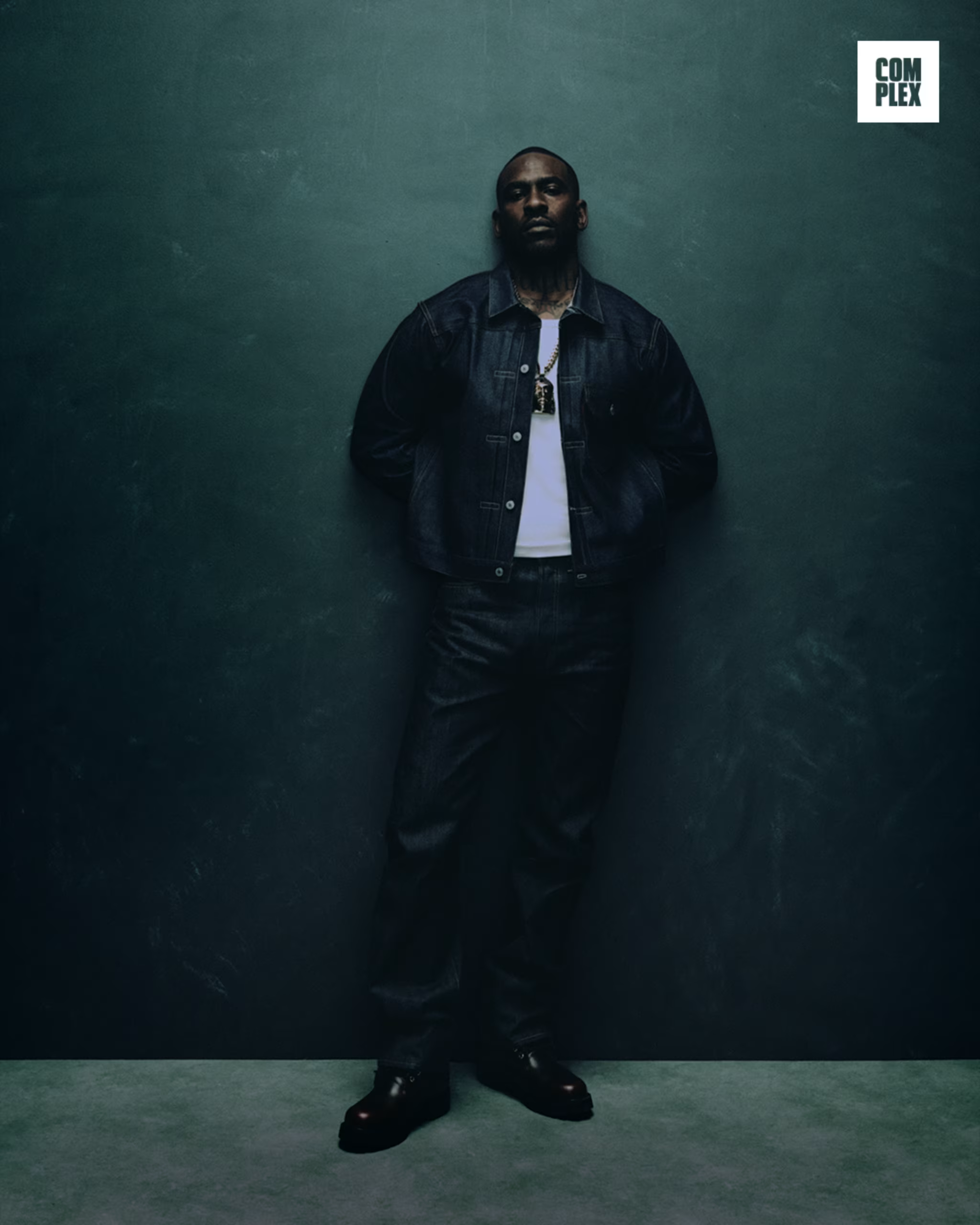
SKEPTA FOR COMPLEX UK BY GABRIEL MOSES

SKEPTA FOR COMPLEX UK BY GABRIEL MOSES
It must feel good going back to where it all started for you: as a DJ—for Meridian Crew back in the early 2000s. Before you even touched the mic, you were spinning riddims for the gang, and now you’ve pretty much taken over the house scene, headlining some pretty major stages around the world. How important was that early grime schooling when it comes to your approach to DJing?
In grime, every tune that’s played is for the reload. But in house music, I don’t think that’s always the approach. I’m not saying there aren’t DJs who do it—there are definitely some sick ones who have that approach—but generally, house music doesn’t have that same reload mentality. So when I’m playing, I’m playing to get the reload, but it’s watching people go crazy over a tune or a mix—you get me? Obviously, I can’t actually reload it because we’re in a house rave, but that’s still my approach. And when people hear Skep deliver house music like that, they understand it more, which is crazy. Even as I’m talking now, I’m realising something: I remember I wouldn’t have liked garage music the way I do if I hadn’t heard [DJ] Fonti play. The way Fonti delivered it to me, mixing it with R&B tunes and songs like “Tainted Love”, that tuned my mind to understand it. That’s how I’m looking at it subconsciously, but now I’ve said it out loud, I’ve realised that I’m trying to deliver house music to people in that same way. Like, “No, you do like this. I like it, and I know you like it—we like the same stuff. You just need to listen to it properly and vibe for a second. Get out of your head that you’re in Russia, because you’re not.” [Laughs]
Talking about the early grime days, do you ever miss that era? I still regularly listen to old Sidewinder sets, especially the Meridian/Bloodline set. There was something about the rawness of grime back then—in the bars, the flows, and in the beats—that I feel like we’ll never quite get again. Or will we?
I listen to all the old sets all the time. When I’m driving, that’s what I roll to. But I feel so grateful to have been part of that culture. There’s culture clashes, and then new hybrids build, and then it moves forward again. For me, I’m always trying to understand where we’re at in this sound ‘ting, like: “Where are we?” I was there at grime. I’ve seen all the genres—dubstep, I was there; funky house, man was there; drill—I’ve seen all the sounds morph to the point where now we’ve got Más Tiempo. I’m just always thinking about where we are now, and I feel like that’s why I’m able to always produce those quality albums that I do when I drop. I really, really miss those days, but it’s not in a sad way. It’s more like they were fun times, you know? I still apply that to what I do now. I just add everything else, what I know now, with that. And that’s what makes the up-to-date Skep. When you listen to those sets, that was what was going on then. And then you listen to The Fork & Knife, and this is what’s going on now. The sound of now.
I literally got the link to your album 30 minutes before this interview, and I’m currently on Track 6. Not to gas it, Skep, but we needed this. The UK music scene needed this. It’s like winter grind mode fuel, but it’s also sounding like one of your most personal projects to date. Would you agree?
[Laughs] Winter grind mode fuel—yes, man! I feel like there’s less fantasy on there, for sure. Sometimes I can write stuff and go into fantasy mode. I’m trying to think of a lyric in particular… Like, “Make your belly look like a bowl of spaghetti.” Sometimes I go a bit mad with it but, this time, I feel everything I’m saying is purposeful. I have a way of saying something how we’d normally say it, in everyday life, and making it sound like a bar. And sometimes I can just MC, you get me? I can get into that mode where I’m just spitting bars, but then I can also say something like, “Sitting in my car, so bored, nothing weren’t popping on ends/Unlocked my 3310, unlocked it, then I locked it again.” I’ve got ways of saying stuff like that and making it sound wavey. So on this album, I’ve just done that. Rather than MCing all the time, I’ve been talking my shit. There’s turn-up stuff on there, of course, but it’s still just me talking. I’m not in fantasy mode. I’m just talking my shit, like I’m sitting in the car with you the whole way.
One thing I’ve always rated about your MCing is your clarity on the mic. Every word lands, and there aren’t many artists who have that level of diction. I’d say Central Cee is one of the closest to you in that respect, and I think that clarity is super-important for a UK artist looking to reach an international audience. How conscious have you always been of making sure every word cuts through, and do you think that’s played a part in your global success?
Big up [booking agent] Rebecca Prochnik, man, because we were on the same agency as Plastician, Skream, Mala, Benga and all those guys. When dubstep started getting exported all over Europe, me and Jamie [Jme] used to get booked as the MCs to go out there with them. I’d be standing on stage saying things like, “Go on then, go on then!”, but the crowd doesn’t know what the fuck I’m talking about. So I’m having to learn how to MC on a world stage. I’m learning how to perform live, right there and then, in front of these crowds. So I’m coming back from shows with Plastician and writing bars like, “Let me see your lighters in the air.” I’m realising I have to rap in a way that people are gonna understand. If I tell them to put their lighters up, they’re gonna put their lighters up and flash them. I learned all of that on the world stage, and the whole time, I’ve just been sharpening my sword, bro, making sure that when I’m rapping, this stuff is for the world. I don’t rap for no small town, no postcode... I don’t just rap for my ends. I rap for the whole world. Every time I step in the booth, I’m on the world stage.
We have to talk about Blacklisted, your album-worthy mixtape that you released back in 2012. It felt like a real turning point in your career, almost a spiritual awakening in the way you approached life and your place in the music industry, as reflected in the The Underdog Psychosis video you dropped alongside it. Looking back, what shifted in you around that time, and how much of the Skepta we know today was born out of that period?
I think it was around the time I came out of that silly deal I signed in the pop era. I have this thing sometimes where I might be uptight, just in my head, being rude or short with people, but I don’t know why. Then I could take my car to the garage, and when I drive off, a weight lifts off me. I’m like, “Oh, that’s why I was being rude.” The same thing happened with that deal. When I came out of it, I realised how much I’d hated life, how much I’d felt like I was being pimped out. I didn’t realise it at the time because I was just trying to make a hit, trying to get a number one, trying to be in the charts with all my peers. And then, when I came out of that deal, I was like, “Damn, bro! That was horrible.” I was back at my mum’s house; I had a mattress on the floor, and from that mattress, I was making music again. Making beats, getting back to it, sampling what I wanted. I sampled Riff Raff for “Castles”. “Castles” came from a mad freestyle—it wasn’t even a proper song like that; it was just a freestyle in my room. I turned it into a big record, put it out, and I was happy because I was doing what I needed to do, what I was supposed to be doing. I was like, “Man, this feels so good!”
I remember “Castles” coming out, and I remember when I dropped “Ace Hood Flow”. I was going to Australia, and when I got off the plane—blud! It was mad. I had people rapping my lyrics back to me in the street, and I was like, “What’s going on here?” I just thought it was mad. I had to shoot the video so quickly, bro. There’s even a bit where I walk out of the screen because I had to change a lyric or something in the edit. I had to shoot the video and go straight to the airport, so I had to walk out of the screen because I couldn’t lip-sync that bar. And then everybody was like, “The way he walks out of the screen is so hard!” I was like, “Bro, this is insane!” I just remember that feeling of being liberated again, and ever since that day, I’ve never wanted to lose that feeling. I feel like even Konnichiwa, everything we all see now, comes from Blacklisted. It all comes from Blacklisted. “Reflecting” was like the inception of introspective grime. Before that, everyone was talking about “mash man up”, do this, do that. But “Reflecting” was the first introspective grime song, and that’s why people rate it so much. Then Underdog Psychosis came next. Since Blacklisted, man, I’ve just been living in that mode, and I’ve never wanted to lose that feeling. Anytime I start to see signs of that old situation coming back, whether it’s the fakeness or me moving towards that silly thing again, I can feel it very quickly.
From what you’re telling me, Blacklisted was definitely an internal awakening, and I’m glad—I think we’re all glad—that you found that. You’ve released a lot of projects throughout your career, but if you had to rank your top three, what would they be, and why?
The Fork & Knife is up there, you know, but let me start with Blacklisted, because that was like a real-life anime, bro. You’re watching a man change right in front of you. That was like the anime inception of Super Roadman, you get me? [Laughs] But then Konnichiwa was game-changing. A real game-changer. What metaphor can I use for Konnichiwa? If Blacklisted was an anime, Konnichiwa was a blockbuster movie. That was the big one. Then I would say it’s a battle between Ignorance Is Bliss and The Fork & Knife. Because we were in lockdown, I could only do so much with Ignorance Is Bliss. I even did one of those big streaming shows. I just couldn’t get the rollout right, but I feel like the songs and videos we shot were great. Obviously, “Bullet From A Gun” and “Greaze Mode” did what they did, and those songs are still going. That album’s took on a life of its own. With The Fork & Knife, though, I’m gonna get to be outside to promote it properly.
The Fork & Knife touches on what it means to be British, Nigerian and a child of immigrants. You’ve spent so much of your career breaking barriers and pushing British music forward, but at this point in your life, do you feel like this album is less about proving yourself to the world and more about understanding who you are as a man and now, probably even more importantly, as a father?
Every time I release an album, I feel like I owe it to my supporters, the people who listen to me, to keep telling them more about myself—things I might have forgotten, things I might have been holding back. I feel like I have to be transparent. I’m not saying I’ve become this perfect person, but this is a very self-aware album. Sometimes in the past, like I said, I’ve gone into fantasy mode, going off in mad different directions. But I feel like I’m locked in right now, and I’m having to ask myself why I am the way I am and where all these things come from. As boys growing up, we often think, “Man’s like my dad,” or “Man’s like my mum.” I’m realising that my outspokenness, my bravery and my confidence all come from my mum. So I’m digging deeper into that story, trying to understand myself more so I can give more of myself to the people.
This isn’t even in my notes, but you’ve been in the public eye for around 20 years now, and you’ve experienced fame at so many different stages of your life and career. Has your relationship with fame changed over the years, and how do you navigate the attention that comes with being Skepta today?
Even now, like: I’m in the airport, going to the gate, and I’ve become my own security. There’s a security guard built into me now from over the years; he’s watching everyone, looking at everyone’s eyes, noticing when people clock me. I clock you first! I can clock your whole setup before you’ve even seen me [laughs]. And just over time, I’ve learned to set boundaries. If I’m not at work, if I’m not at a show, and I’m with my kids, no one’s gonna come up to me and ask for a picture. I won’t even acknowledge them. They’ll probably think I never even saw them, the way I walk past. If someone comes up to me while I’m holding my daughter’s hand, I’m like, “You can’t be talking to me right now.” I’ve probably lost some fans over it. I know I have. But over the years, I’ve set my boundaries, and people kind of just let me be. They let me be in places where I don’t need to be bothered. And it’s important to me because my vision is to come out the other side like a Virgil—rest in peace—or a Gee Patta, or one of these OGs we see. They’re still walking on the road, still local, still on the ground. I never want to remove myself from that too much. So I try to move through the world now in the way I want to be able to move in the future.
The Fork & Knife takes its name from the story about your mum’s dad wanting to work hard enough to one day eat with a fork and knife. It speaks to the sacrifices immigrant parents make and the hopes they have for their children. Now that you’ve achieved so much yourself, what does that story mean to you today, and what did you want to say about the relationship between your parents’ generation and yours through this album?
I think this album is going to mark a moment where I look back at the things my family once aspired to. I remember going to the GQ Awards and winning Man Of The Year, and they brought out the beetroot. My mum looked at me and said, “You know what this is?” And I was like, “Yeah, this is what we were talking about.” This album is really gonna mark that irony, that oxymoron. It doesn’t even make sense, because that wasn’t really what we wanted. And actually, it’s a good lesson in being careful about what you set your sights on as success. I’ve learned that no matter what you see as success, once you achieve it, you’ll just set yourself another goal. So it’s never-ending. The happiness and liberation aren’t necessarily in achieving those things. For me, it’s about being happy with the work I’m doing, making sure I’m using my voice for the right reasons and making the music I want to make. That’s what The Fork & Knife represents: the irony that my mum doesn’t even want them fancy dinners—she just wants ground rice and stew [laughs]. I just bought my parents a house out in Lagos... They’re living it up over there right now, in the house I got them.
Ahhh! Congrats, man. That is dope! I mean, that’s what we do this for, innit? So that, one day, we can pattern our parents up and make sure they’re comfortable after all the sacrifices they’ve made for us.
But it’s two levels: we want to pattern them up, but they want to see us pattern ourselves, too. They don’t just want us looking after them; they want to see all of us settled, doing well and comfortable, rather than running around like headless chickens. That’s what really matters to them.
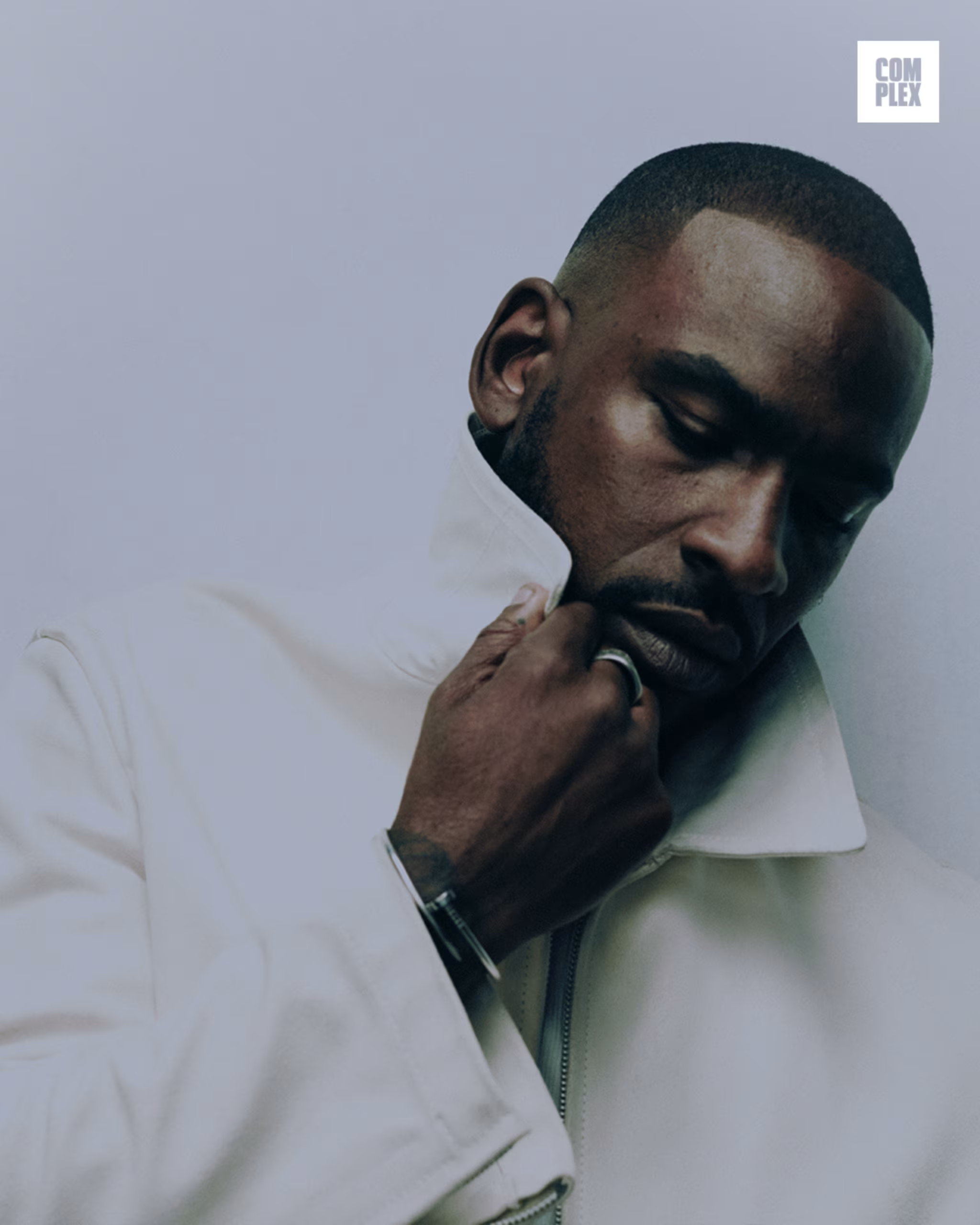
Skepta For Complex By Gabriel Moses

Skepta For Complex By Gabriel Moses

Skepta For Complex By Gabriel Moses
You probably don’t even have the time to do this these days, but do you ever quietly slide through your old stomping ground in Tottenham, North London, and reminisce about the good old times you had in the ends?
You know what? I went to watch a game at the [Tottenham] stadium the other day, and I took my son down to Meridian. We took some photos of him down there, on Meridian Walk, where I grew up. But nah, I don’t really get the time to go back a lot these days... I see all my guys from there anyway. We still see each other around.
London has changed massively since you first came through, culturally and creatively. Does the city still inspire you in the same way it did back then, or do you find yourself looking elsewhere for inspiration now?
Yeah, for sure. London’s got everything in it, right? Everything. You can figure out your own language and your own aesthetic just by being there. There are so many different cultures, so many crossovers and hybrid genres happening. That’s what London has always had.
What things do you do to keep yourself grounded? It’s easy to get lost in the sauce, but how does Skepta make sure he stays connected to the source?
How do I keep myself grounded? Erm… You know, it’s a bit bittersweet, because there’s a lot of pain you have to hold on to, just to remember that you never want to make other people feel the way you felt. Whether it was growing up as a kid, being in the industry or trying to get people to understand my ideas, I’ve experienced a lot of pain along the way. So now, I have to make sure I don’t get too lost in my own head. I have to remember that, no matter how much I might want people to understand where I’m coming from or show me some mercy, people look at me differently now, bro. I have to remember who I was and how I used to think when I was that young Black boy, sitting on the wall, swinging my legs. When the youngers are asking me for things, or my family needs something, or I need to look at a situation from a different perspective, I just have to remember that little guy. Obviously, it’s painful to go back to those memories sometimes, but that’s why it’s bittersweet. Those experiences keep me grounded and remind me of the responsibility I have now.
From the outside, success can look like freedom, but it also brings its own pressures and responsibilities. What’s something about reaching the level you’ve reached that nobody really prepares you for, and that you only understand once you’re actually living it?
You have to work, bro. Mentally, I feel like I’ve got to work twice as hard now because people don’t support you as much. When you’re coming up, people get behind you. They’re like, “Yeah, man, this is the guy. He’s gonna be the guy.” But no one prepared me for what happens when you’re actually up, when you’ve had a great run and achieved a certain level of success. Everyone just assumes you don’t need that support anymore. And it’s not even in a malicious way. People are just like, “Yeah, you don’t need it.” So now I feel like I’ve gotta go twice as hard. I’ve got to go extra hard, dig deeper and make sure my albums can’t be picked apart. I’ve got to make sure that when I’m in the news, I’m saying the things I should be saying at this stage of my career and not getting lost in the sauce. It’s a lot of responsibility.
As well as music, you’ve also made your mark in fashion, launching your own fashion house, MAINS, back in 2017. How have you found the experience of stepping into the role of an actual fashion designer? Has it been a natural transition from the way you’ve always expressed yourself through your own style, or has it challenged you to think creatively in a completely different way? And what have you learned about the fashion industry since getting involved in it from the other side?
With MAINS, it all comes from raving when I was younger and loving brands like Moschino and stuff like that. For me, MAINS is basically a moodboard. If a brand wants to work with me, they can look at MAINS and see the kind of things I’m thinking about, the ideas I have and what I’m capable of creating. It’s like my own personal design moodboard. And it’s been sick, man. We’ve been in the Met Museum, we’ve made outfits for big artists, actresses and actors. People from all corners of the world are connecting with it and showing love, so that’s been amazing. It’s good to have MAINS as a space where I can express myself through design. At the moment, though, one thing I really want to focus on is getting the prices down. The cost of living is mad right now, and I don’t want MAINS to be a brand that people love but can’t afford. So we’re working on ways to make the clothes more accessible and bring the prices down, without losing what makes the brand special.
You’ve been the face of some iconic brand campaigns, from LV and Burberry to Timberland and Nike, and you’ve always had a strong influence on how people dress. How do you approach working with brands that each have their own heritage and aesthetic, and how important is it that those collaborations feel like a natural extension of your own personal style?
I don’t really do it unless I feel like it’s in my world. It has to make sense. It’s not just about the bread. I’m sure there have been times when my team have received offers from brands and they probably haven’t even bothered bringing it to me, because they already know it’s not my world. That’s how clear we are on it. And I think as long as you stay true to that, anything you do with a brand should just be an addition to what you’re already doing.
Are you working on any new art pieces, by the way? Mama Goes To Market was a really interesting move back in 2022, and it was dope to see you showcasing your creativity in that space.
I’ve actually just finished one! I wanna do an exhibition at some point, but I don’t wanna take on too many things and stress myself out, man. Maybe by the time I’m ready to do it, I’ll have even more ideas. I’ve already got a few new ones that I wanna start working on. But yeah, I really enjoy it. It’s good to take some of the pressure off my music sometimes, because you can end up over-exhausting yourself creatively if that’s all you’re focused on.
Seeing you in your mid-40s, still maintaining your relevance across music, art and fashion, gives those of us in our late 30s inspiration to keep pushing. I don’t know if you’re even aware of the impact you’re having in that way, but do you realise how much you’re inspiring people to keep evolving and chasing new things, regardless of age?
I think of it like athletics, man. I’m like a LeBron, Zinedine Zidane, Ronaldo in this ‘ting! I should’ve done sports, bro, but music was just too crazy, too mad. I feel like I’m still youthful. I’m youthful at heart, innit. And again, going back to what I was saying about staying grounded, there’s a bittersweet side to that youthfulness. Maybe it’s because of my childhood and certain traumas that have stayed with me. Sometimes, when I feel a certain emotion, it takes me straight back to my living room in Meridian Walk, where the computer was the only way I could really express myself in the house. So it’s bittersweet, still. When you’re younger, you’re free. You can speak your mind, say how you feel and just be yourself. But as you get older, you start getting tied up in these silly little verbal contracts and paper contracts, and suddenly you can’t say or do certain things anymore. You’re getting older, but not even necessarily in age. You’re getting older in terms of your freedom. You’re losing that freedom you had when you were young.
So, for me, sometimes I might throw my toys out of the pram. Sometimes I might get lost in my head and spiral into a dark place. But I think staying youthful, staying connected to that young Skep, is what brings me back. Whatever I’m dealing with, whether it’s politics, music, how I approach my career or how I stay relevant, I always ask myself, “What would that young Skep say? What would he think?” I’m talking about the honest version of me, before I’d dealt with all these different people, had all these conversations and been through all these experiences that can change how you think. That young Skep who would just say exactly how he felt. Man’s just gotta stay youthful, bro. You can’t forget who you were.
Jay-Z famously announced his retirement at 33 before eventually coming back, and Central Cee told me just last year that he wants to retire at 30, too. At 44, you’re still out here giving it to dem! But has retirement ever crossed your mind?
Nah, I don’t think I’ll ever retire. I don’t do music as a hobby. Music is how I think. If my card declines right now, as I’m buying this bottle of water at the airport, a mad lyric will come into my head. That’s just how my mind works. It’s how I move, how I express myself and how I enjoy my life. Obviously, I’ll have breaks and take time out whenever I need to rest my mind, but I’ll never retire from music.
You’ve already achieved things that many artists spend their entire careers chasing, so you’re no longer in a position where you have to prove yourself in the same way. What motivates you now? Are you still chasing a particular feeling through music, or are you more interested in building things that might not fully come to life until years from now? You’ve always been a visionary, in that sense.
I think I’ve developed a sort of Batman persona over the years because I can be a bit standoffish. My eyes are always open, bruv. I’m constantly watching out for people who are trying to finesse me in music, and trying to work out who’s really an artist and genuinely here for the music. I blew up in a white tee. I didn’t have no fancy stuff, no Rolls-Royce, no jewels—nothing! I blew up in a white tee, so I know it can be done without all that. Over the years, I’ve seen bare people come into the game acting like, “Oh yeah, Skep, you’re my idol, you’re my guy, you taught me how to do this.” And I just watch them, thinking, “Let me see what happens when you get a little bit of hype.” That’s when you really get to see what people are about. That’s why someone like Novelist is a real one. I don’t think I’d ever make an album and not have Novelist on there. He’s my guy, and has always shown me that he’s genuine in this ‘ting. When I think about my longevity, I feel like the proof’s gonna be in the pudding when it’s all said and done. I really love this, bro: the fashion, the beats, the bars, the DJing, live recording, freestyles, singing, dancing—whatever it is. But I just genuinely love music. That’s what it all comes down to.
COVER STAR: Skepta
WORDS: Joseph ‘JP’ Patterson
PHOTOGRAPHER: Gabriel Moses
CREATIVE DIRECTOR: Katja Horvat
STYLIST: Zahra Asmai
GROOMING: T Styles
MAKEUP: Shanice Croasdaile
SET DESIGN: Julia Dias
PRODUCTION: Concrete Rep.
TECH: Anthony Rivera
COMPLEX UK TEAM
EDITORIAL DIRECTOR: Jacob Davey
EXECUTIVE EDITOR: Joseph ‘JP’ Patterson
SOCIAL MEDIA ASSISTANT: Sik Frydas
C/O: B-Engaged