Key Takeaways
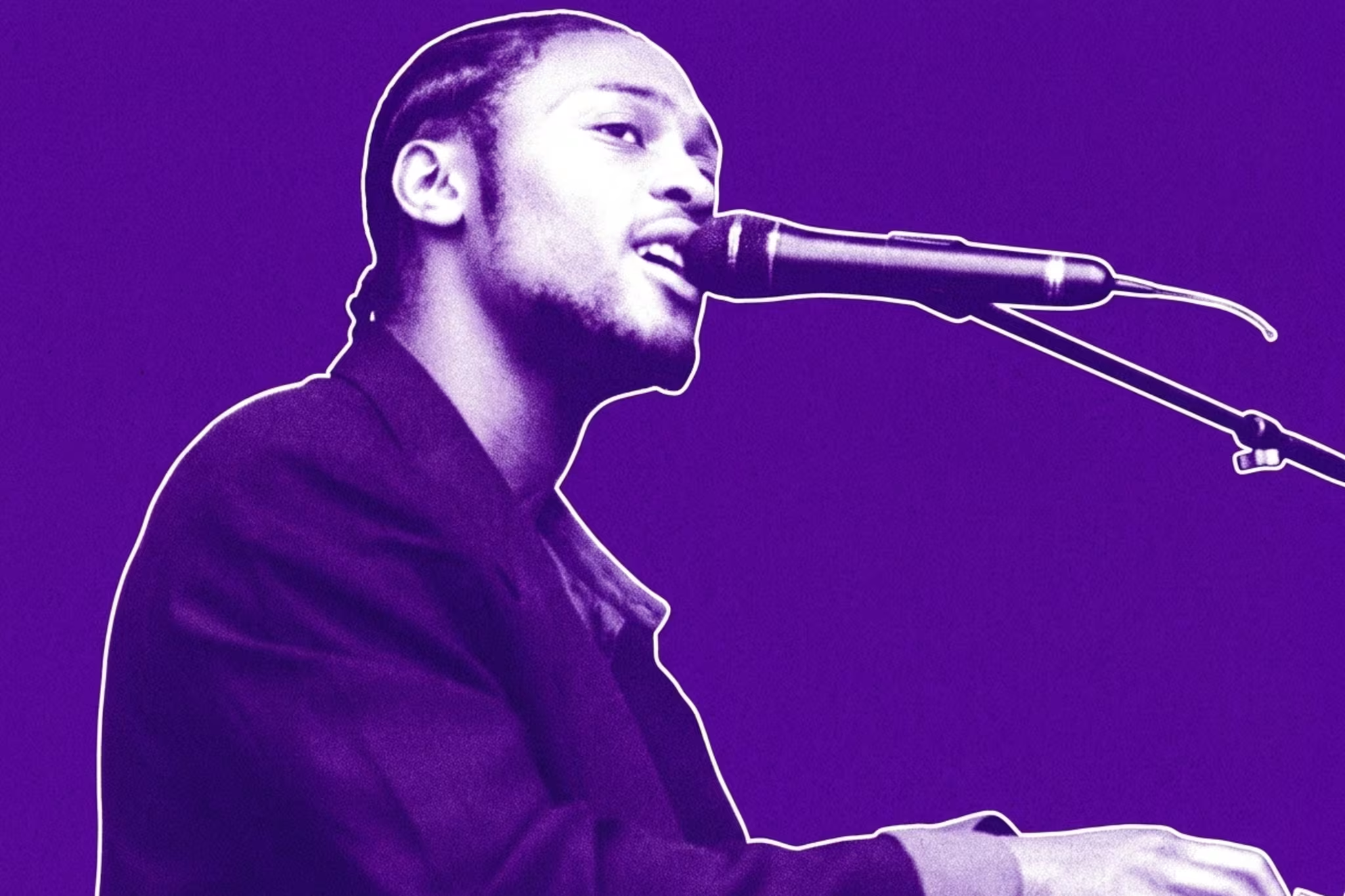
In early October 1999, I was in New York turning in the final road accounting for the Maxwell tour and looking forward to getting home for the first time in eight weeks. As I was walking back to my hotel, my cell phone rang. “Mr. Leeds, my name is D’Angelo. I have a new album and a tour coming and wondered if you would be interested in taking a meeting.”
With Max off the road for a while, I was unemployed. So what do you think? “Of course. I love your work. I can stay in New York if you’re available tomorrow.”
D’Angelo and Maxwell were peers but the music press had already cast them as rivals. Both had burst on the scene with clever, fully developed hit albums. Their rise as artists with genre-shifting styles was already being viewed as a benchmark—a hint of things to come in Black popular music. It was Maxwell the PG-rated love man versus D’Angelo the X-rated, brown-sugar smokin’ homeboy. Maxwell/Beatles vs. D’Angelo/Rolling Stones. Critics frequently compared their records and personal appearances, a circumstance they both resented. Typical was Jim Farber in the New York Daily News who pointed out, “Along with D’Angelo, Maxwell created the genre of alternative r&b.”


Word traveled fast. Maxwell called me and I sensed that he felt betrayed—good for my ego, bad for business. “I heard you’ve gone over to the dark side. Be careful over there, those people aren’t your type.”
He was wrong. I knew what Max meant, but there’s a side of me he didn’t know. D’Angelo is as much my type of people as Max is. Just different. How could Michael “D’Angelo” Archer not be my type of people? He was a church-raised gospel-styled soul singer from—what?—Richmond, Virginia! Yes, D’Angelo turned out to be that young artist in development that Gary Harris had told me about in 1992.
My only hesitation was my vision of that chubby kid in a trench coat sitting behind a piano. And why did it take five years for a second album? But the prospect of working with another young artist considered to be cutting edge was exciting.
The next day I met with D’Angelo and his managers, the late Dominique Trenier and Stan Poses. They played me some of his still unreleased second album, Voodoo, including a hypnotic ballad called “Untitled (How Does It Feel)” that sounded like a smash hit. I was no longer unemployed.
We talked about plans for an ambitious world tour in 2000, one that would require a creative set design and professional crew. I was excited at the prospect of, once again, building something from scratch. The Voodoo Tour would essentially be D’s first. He had played some dates behind the success of Brown Sugar, but D had been slow to establish himself as a live performer. The show I saw in Houston had been typical. D’s small band contained respectable musicians and singers, particularly Angie Stone, but he was never satisfied enough to mount a serious tour. His sights were set on much more.
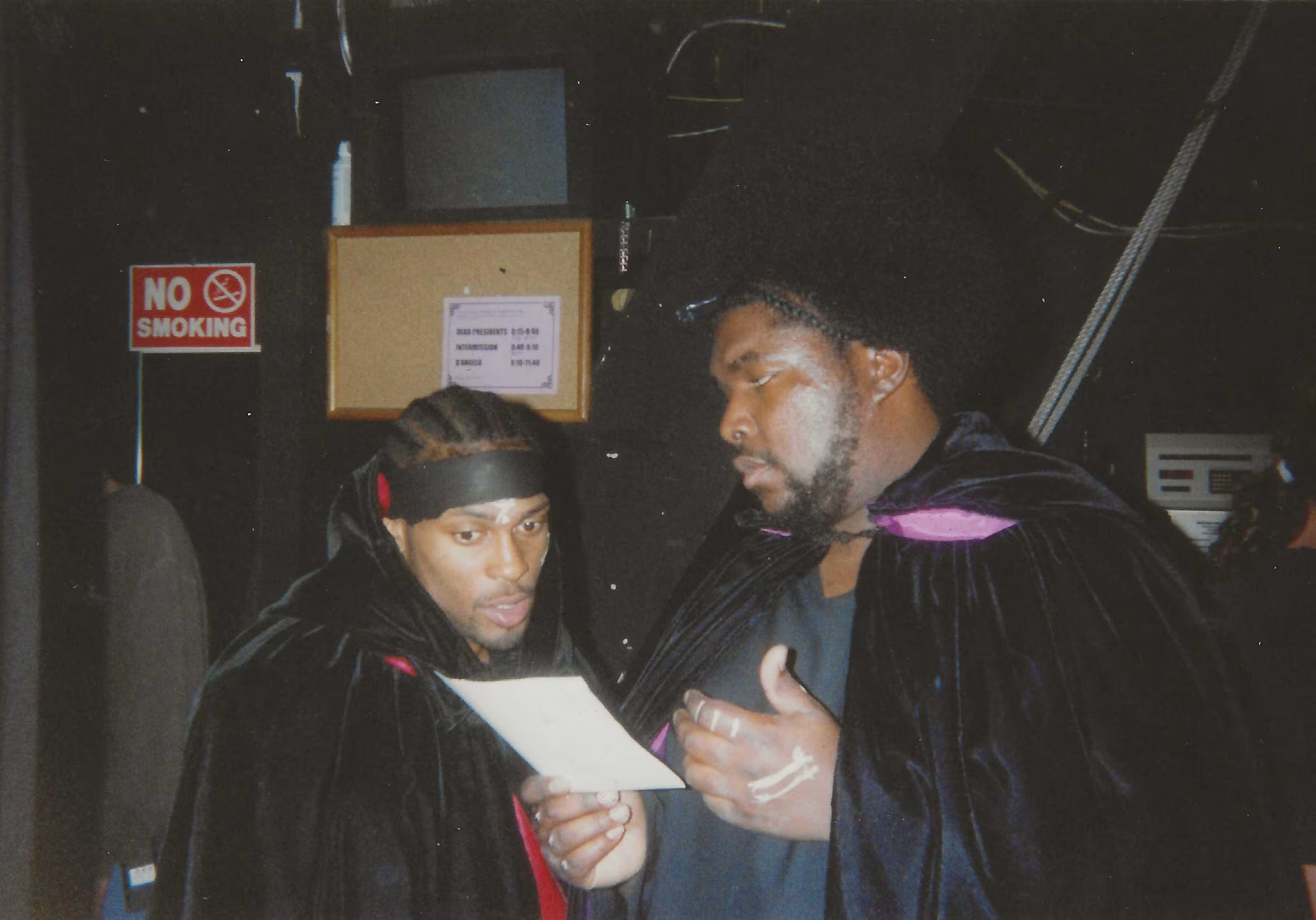
After attending a D’Angelo band rehearsal, I understood the real difference between him and Maxwell. Max was a singer-entertainer, a great soul crooner in the tradition of Sam Cooke, whereas D’Angelo was a singer-musician-bandleader. Sure, his pure vocal style was straight out of the church, reintroducing that traditional style to modern hip-hop/R&B, but his musicianship was equally significant. Once word spread, it became a magnet to talented young musicians. One of them was the man who would become the yin to D’s yang, Roots drummer Ahmir “Questlove” Thompson.
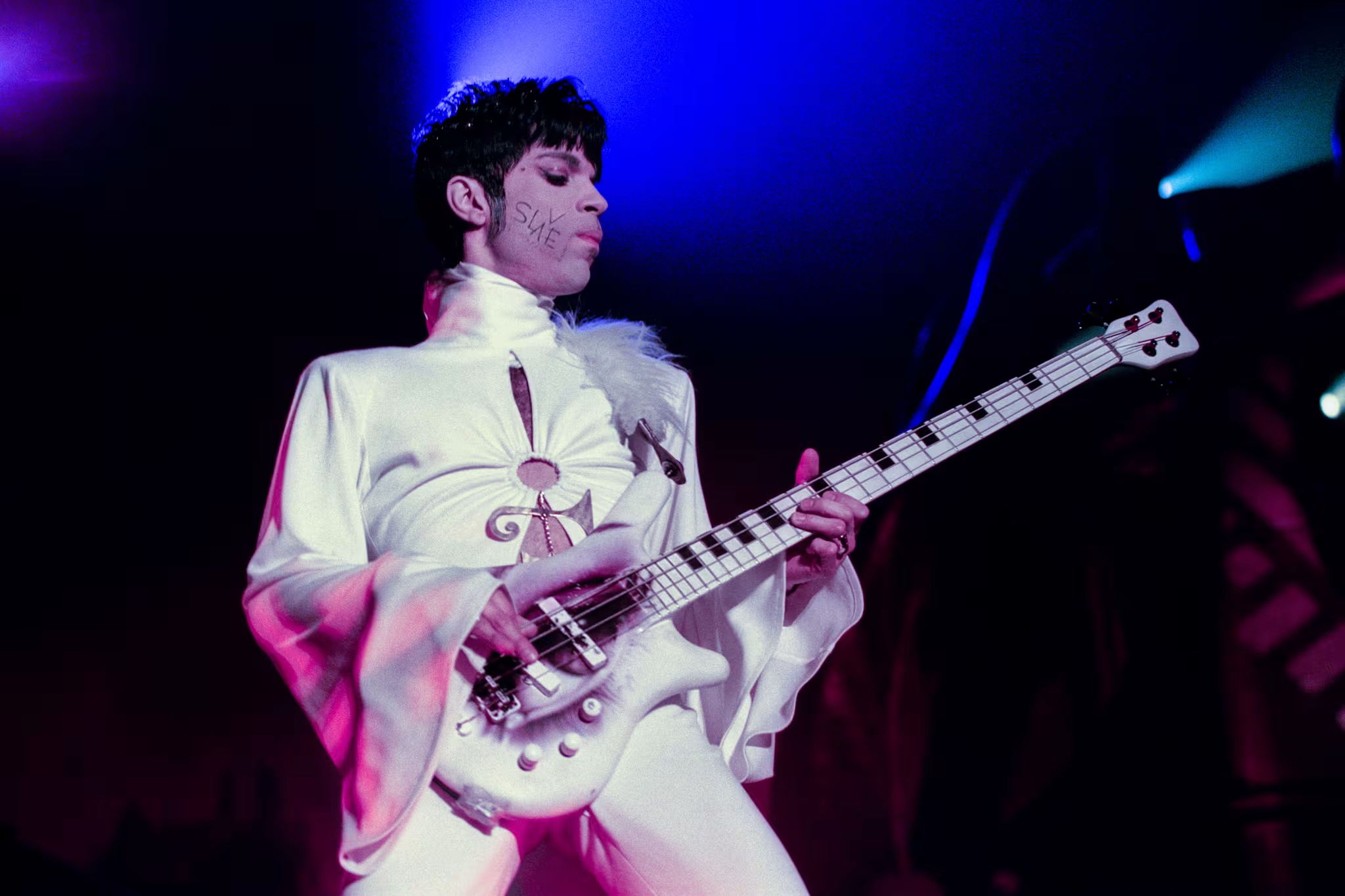
D was very much a hands-on bandleader. He knew every part of every song and how he wanted them played. Questlove became the wingman who could finish what D started. They spent days together studying concert videos of Prince, James Brown, and Sly, planning the structure of their dream tour. Pacing, segues, no detail went without attention. Needless to say, they liked picking my brain about those old days. No story was too trivial to hold their interest. But they damn near knew more about my old tours than I did. They’d ask me things the answers to which I’d long forgotten.
The recording sessions for Voodoo began in earnest some time in 1997. D’Angelo, Quest, and engineer Russell Elevado chose to work at Electric Lady Studios, famously built for Jimi Hendrix as his personal laboratory.
When I arrived on that scene in late 1999, Electric Lady was still in full swing. I had grown accustomed to the typically closed recording sessions of James Brown, Prince, or Maxwell. I had never experienced anything like the Soulquarians. It was like a funk/hip-hop summer camp. Doors were mostly open, everyone periodically checking out each other’s work. D’Angelo was putting the finishing touches on some remixes in Studio A. Erykah Badu was in B working on Mama’s Gun. Somewhere else in the building, Common was working on Like Water for Chocolate. Questlove, the camp counselor, was constantly bouncing from one room to the next.
D’Angelo’s tour was just three months away and we needed a set, crew, and band. Bill Reeves to the rescue. Bill met with D’Angelo and discussed ideas for a set, then designed it and found the people in LA to build it.
Speaking of bands, all the musicians who worked on Voodoo recognized that the tour was going to be something special and were determined to be part of it. Interpreting the music on the record required players willing and able to bring the J Dilla rhythms to life, something that no one had really done before. Questlove took a long leave from the Roots. Guys with established careers, like James Poyser, Pino Palladino, and Roy Hargrove, were in great demand, but they were more than willing to clear their schedules. Guitarists Spanky Alford and Jef Lee Johnson had recorded with D, and young percussionist Frankie “Knuckles” Walker was a Questlove protégé. Hargrove recruited the horn players, all on loan from the jazz world—Frank “Kuumba” Lacy, aka “Roots,” on trombone, Russell Gunn on trumpet, and Jacques Schwarz-Bart on tenor saxophone. The vocalists consisted of Shelby J. (Johnson), who would later become an integral part of Prince’s band, R&B star-in-the-making Anthony Hamilton, and the soaring falsetto of Jack E. King. I realize that some of these names may not register with laymen, but understand that these are master musicians, way above the level of the usual touring R&B or pop band.
To my delight, I discovered that D consciously distinguished between how his records and live shows should sound. He sagely embraced them as two entirely different art forms. On Voodoo the minimalist tracks were intentionally restrained. There was a lot of air space in the music. Adapting the songs for the stage called for some reinvention. The Soultronics upped the tempos and took subtle parts to the forefront, giving the music a new life with added dimension and dynamics. Then there was that Dilla influence.
One day, during rehearsals, I casually mentioned to D that my old-school ears were wrestling with some of the band’s rhythms. D smiled and said, “Stop thinking about the music, just feel it. Once you start doing that, you’ll get it.”
The OG in me was dubious, but sure enough, a day or two later, I was busy working on travel itineraries or some such thing and caught myself tapping my feet, instinctively grooving to the very music I said I didn’t understand. D was right. There was nothing to think about; the shit felt damn good. Ever funkin’ on.
The tour was slated to open March 1 with an unprecedented six-day run at the House of Blues in LA. But first D had warm-up gigs for radio stations in California and Sidney Miller’s Black Radio Exclusive, an industry convention in New Orleans.
My first opportunity to see the “new” D’Angelo performing on an actual stage was at sound check for the BRE gig. I was astonished. Who was this guy? This couldn’t be the guy I had seen in Houston. He was all over the stage, equal parts Prince, James Brown, and Al Green but unmistakably Michael “D’Angelo” Archer. Forget sitting at a piano; dude was interacting with his singers and the band, dancing back to his microphone, doing splits . . . where did this guy come from? Oh yeah. Richmond.
The single “Untitled (How Does It Feel)” was released the first week of January 2000 and, propelled by its erotic video, became an overnight sensation. The highly anticipated Voodoo was released four weeks later. It had been five years since Brown Sugar, and anyone expecting a similar record was in for a surprise. “Untitled” was Voodoo’s anomaly. The rest of the album was a commercially risky departure from the more traditional Brown Sugar. D’s label, Virgin Records, was a little concerned about Voodoo’s questionable accessibility but breathed a sigh of relief when the album debuted at number one on the Billboard 200 albums chart and sold a staggering 320,000 copies in its first week.
Tour rehearsals wrapped on February 28 and the next day we flew to LA, where we went to see the set for the first time. D was like a kid as he excitedly climbed around, exploring every nook and cranny. The small stage at the House of Blues couldn’t accommodate much in the way of production, so the set was broken down and shipped to New Orleans, where we’d catch up with it a week later.
The six nights in LA somewhat reminded me of the Purple Rain Tour. We had the hottest ticket in town. The usual booking at the House of Blues was a one-nighter. Multiday runs were highly unusual, six days was unprecedented, and all had instantly sold out. Scalpers were making a killing, and every celebrity in Cali was clamoring to get on the guest list. As if that wasn’t enough to contend with, we were recording all the HOB shows, so a huge semi containing the remote studio was wedged into the driveway behind the club, obstructing the entrance to the parking lot. The usually hustling parking lot attendants who counted on their tips were not pleased. Nor were VIP guests who had to hunt down a place to park blocks away.
D and Ahmir hadn’t settled on a tour setlist. The idea was to try every song they had rehearsed and see what worked best. The climax of the show was obviously going to be “Untitled (How Does It Feel),” but the impact of that sexy video surfaced early in the shows. By the third or fourth song, there was a growing chant of female voices from the audience. “Take it off! Take it off!” they yelled at a wife-beater-wearing D’Angelo. I suppose we should have seen this coming but it startled D. He was too much of a performer not to oblige, but it was more than a distraction. The thought that audiences were more interested in his physique than his music freaked him the fuck out.
D is what I call a pure artist. He never intended to become the Chippendale of soul music. From that point on, D suffered from a self-consciousness that hadn’t existed before. Prior to each show, he had to play mind tricks on himself. It was suddenly a challenge to get into his “zone,” the mindset he needed to take the stage.
Stripteases aside, the shows were sensational and generated tons of positive press, the perfect kickoff for a tour. After stops in New Orleans and Atlanta, we headed into Gotham and three sold-out nights at Radio City Music Hall. Once again we were the hottest ticket in town and I was pulling my hair out trying to accommodate all the VIP guests on an out-of-control guest list.
Our support act in New York was the multitalented Yasiin Bey, then still known as Mos Def. In all the backstage chaos, I didn’t realize that Mos hit the stage almost twenty minutes late. Combined with a mandatory intermission and the fact that our setlist was still running too long, the show ran past curfew and into a union-driven extraordinarily expensive overtime.
To be fair, an opening act is a tough slot, playing to a half-empty house and distracted by all the late audience arrivals. The second night it was clear that Mos’s crew had no intention of putting him onstage for an 8:00 p.m. curtain. But I wasn’t about to get stuck with another costly penalty, so I confronted his handlers and explained that any further curfew penalties would come out of Mos’s performance fee. A middle-aged gentleman took loud offense and put his hands on me, pushed me in the chest. Dude thought he could punk me, wanted to fight! As stagehands and members of our crew rushed over, I did what any skinny-ass kid knew to do when under attack—wrapped my arms around the dude, smothering any more pushes or punches.
Darryll Brooks, our tour promoter, intervened while Mos worked his way slowly to the stage, seemingly unaware of what was going on. The incident took on a life of its own. Brooks said he wanted a sit-down with me and Mos’s camp and then asked me if I felt the need for extra security. Really? This is all that? Did Darryll know something I didn’t know? I told him, “I don’t mind a meeting but there is really nothing to discuss. Mos performs on time or leaves the tour. I’ve got bigger things to worry about.”
The third night Mos was on time and all was forgotten. I later learned that my “adversary” was Mos’s father, who at the time was fighting for control over his son’s career. I guess that gives him at least a partial pass. I didn’t see him again the rest of the tour.
I should point out that Yasiin (Mos) was pleasant throughout. He’s a wonderful performer and has grown into a fine actor. Over the years, we’ve run into each other several times and always had genuinely friendly conversations. He just didn’t like playing to a half-empty house. I understand.
The tour moved on. We circled the States, hitting Philly, Chicago, Dallas, Houston, Oakland, back to LA, St. Louis, Detroit, and Washington. Along the way, fatigue set in. The nearly two-hour shows were physically demanding and some days D needed coaxing to get onstage. But our routing was relatively easy as tours go, no more than two show days in a row. So, am I implying that D was lazy? No. Nobody worked harder and longer when it came to rehearsals or performances. I think he was just plain bored with the routine of show, bus, and hotel. I got the sense that there were times he would have preferred being at home.
The first half of the tour wrapped on April 28. We’d have a two-month break before resuming in Europe. The final show was appropriately planned as a triumphant homecoming in Richmond at the Landmark Theater. As a kid, D had won a talent show at that very theater, then called, what? The Mosque—where I first saw James Brown perform in 1963.
The sentimental side of me loved the poetic justice. D’s wasn’t the only career that began inside those walls. Other than cosmetic refurbishing, the place looked the same. The same marble fountain in the middle of the small lobby. The same incline as one walked into the orchestra level of the theater. And the same curved wings of the stage that extended up to the cozy VIP boxes. Most importantly, we brought a level of excitement that nearly ranked with what I remembered from September 1963.
Watching the shows on this tour had been more than a treat. It’s one thing to enjoy a great performance; God knows I had my share of those experiences. Enough that part of me sometimes felt I had seen it all. But for a real music nerd, it’s quite another thing to watch and listen to something not just entertaining but excitingly new.
D’Angelo had turned into a dynamic performer and drop-dead soulful vocalist. D and the Soultronics had succeeded in incorporating the Dilla influence into classic funk. Ahmir’s snare drum cracked like Clyde Stubblefield and played just enough “drunk” to be unmistakably Questlove. Pino Palladino’s subterranean bass would get so far behind the beat that it felt like it was coming from a coal mine. Add two ferociously rhythmic guitarists and James Poyser’s tasty keyboards and you got a feeling in part of your gut you didn’t know existed.
That wasn’t all. The choreography and showbiz elements were creative and never at the expense of the music. I had never seen a star as willing to share spotlights as D’Angelo. The remarkable vocalists, each with their own distinctive style and persona, were not relegated to an upstage riser. Anthony Hamilton, Shelby J., and Jack E. King were all over the stage interacting with D and the band. The Soultronics played team ball, wholly integrated into D’Angelo’s concept. D’s name was on the marquee, but it felt like the Soultronics were the Earth, Wind and Fire to D’s Philip Bailey. The cleverly cohesive setlist was brilliant. The way the mesmerizing show unfolded could have been confused with a stage play. At the end, the “cast” left the stage one by one, allowing each singer and musician to get their dap. Finally, there sat D’Angelo, alone at his piano to pull every ounce of soul out of his biggest hit, “Untitled (How Does It Feel).” Full stop. Audiences were too spellbound to expect an encore. The show’s natural finale couldn’t be topped.
Over the course of the tour, D and I grew closer. It was enlightening that he appreciated both my professional experience but, dare I say it, my age. Thanks to my increasingly white hair, Dominique Trenier called me “Silver Fox,” which caught on with the entourage, but D had taken to calling me “Pops.” (I suspect that he had read that’s what James Brown used to call his manager Ben Bart.)
While in Richmond, D and Trenier asked me to become his co-manager. Dom’s area of expertise was creative marketing and he was accustomed to being D’s day-to-day go-to. He had buoyant energy and was full of clever ideas but had little experience in my end of the business. We each brought something the other lacked, so we were a good fit.
The tour resumed July 2 at the Essence Festival in New Orleans, after which we had three weeks in Europe. The highlight was the North Sea Jazz Festival on a lineup with Meshell Ndegeocello and Youssou N’Dour, both personal favorites. That show is one of my most memorable nights. Me’shell played a terrific set with her talented band that included keyboardist Federico Pena and percussionist Danny Sadownick, both of whom had once played with Maxwell. D’Angelo was on next and tore the place up. I mean killed. I teasingly asked promoter friend Rob Hallett how N’Dour imagined he could follow us. Hallett, who was part of Youssou’s management, just laughed. About ten minutes later, the lights dimmed and suddenly the entire building was shaking to the insistent rhythms of about fifteen majestic Senegalese drummers marching from the dressing room to the stage. Before Youssou sang a note, he had the entire crowd in the palm of his hand. His set was magical. I had forgotten that N’Dour’s records were much more popular in Europe than in the States and Youssou is a dynamic performer. Three entirely different acts, all at their best and cut from the wide cloth of the Black music diaspora.
Back home after Europe, we played the markets we missed in the spring. By the time we put the tour to bed in Atlanta, D was bored and exhausted, but the final show was huge fun. Along the way, D had begun performing James Brown’s “Sex Machine,” so we invited former Brown wingman Bobby Byrd to recreate his role on the Godfather’s hit. The Soultronics also learned Byrd’s own “I Know You Got Soul,” which had a cachet in the hip-hop community due to a popular cover version by Eric B. and Rakim. The seventy-year-old Byrd’s energetic walk-on was a treat.
It was a very sentimental night for me personally. Besides putting a wonderful tour to rest, here was the first person I befriended in the James Brown camp way back in the 1960s. It was a real JB reunion backstage. Bobby brought Brown manager Charles Bobbit with him, and Brown’s second wife, Deidre, was there with daughter Deanna. It was great seeing them all.
The year 2000 had been more successful than any of us could have imagined. Voodoo won a Grammy for Best R&B Album. “Untitled (How Does It Feel)” won the trophy for Best Male R&B Vocal Performance. The table was set for D’Angelo to graduate to superstardom.
At that point I was probably more excited than D was. I was co-managing the next big star. I knew what fans didn’t. Brown Sugar and Voodoo had just scratched the surface. D was a multitalented artist with a depth of unmatched musical creativity. I couldn’t believe my good fortune. I was eager to get started on our next step.
We had countless reels of exciting recordings from the tour that D and Russ Elevado began leisurely mixing for a proposed live album. D also ruminated the idea of a Soultronics album before his own next record, but wasn’t anywhere near ready to begin working. The more we urged him to get into the studio, the deeper he dug into his hideaway. He later admitted that “at times I felt like I wanted to run away from it. I still reject a lot of shit . . . I have to continue to remind myself why I’m doing this and the things that inspired or motivated me way back before Brown Sugar ever happened and before I ever got into this business—just my love for the music and wanting to reach the people.”
And there it stopped.
Excerpted from IT'S GOT TO BE FUNKY: My Life in Music by Alan Leeds. Published by AUWA, an imprint of Farrar, Straus and Giroux. Copyright © 2026 by Alan Leeds. All rights reserved.